One on One: A woman's work in progress
October 25th, 2006
By Ruthie Blum Leibowitz
If you own a computer and hadn't heard the name "Wafa Sultan" prior to last February, you were bound to have become familiar with it since then. A record eight million hits and counting have been charted on a six-minute video clip - originally subtitled and circulated on the Web by the Middle East Media Research Institute - in which Sultan, a Syrian-born, Los Angeles-based pundit (trained as a psychiatrist) slams Al Jazeera host Faisal al-Qasim and guest Ibrahim Al-Khouli about the ills of Islam.
That Sultan is an Arab woman telling off her male challengers on this particular network is only part of the reason her appearance is so startling.
More sensational is the fact that the outspoken 49-year-old is herself a Sunni Muslim. Well, she was born and raised as one, at any rate. And, unlike many of her sympathizers, she does not hold with the opinion that Islam was "hijacked" by extremists. On the contrary, she says, serious research into the holy texts led to her own personal rejection of the religion. The faith, she says, cannot be reformed, but rather has to be "transformed."[قلنا: اظهر وبان وعليك الأمان! منذ حوارك على قناة الجزيرة وأنت تدّعين سعيك لإصلاح الإسلام والآن بدأت تقولين "لا يمكن إصلاحه!". يبدو أن سياسة "تمسكنوا حتى تتمكّنوا" تؤتي أكلها بشكل جيد.]Anyone hearing the keynote address she gave earlier this month at the conference "Women in the Middle East - the Beacon of Change" (held in Washington by the American Enterprise Institute) would have been hard pressed to disagree with her assessment. Not that the other panelists - myself excepted - had anything rosy to report on the treatment of their countries' female population.
In fact, the only "disagreement" among the participants, who hailed from Egypt, Tunis, Libya, Lebanon, Iraq, Saudi Arabia and Sultan, from Syria, was the extent to which women could and would ever be able to enjoy freedom under Islamic regimes. Otherwise, consensus had it that women's and human rights violations throughout the Arab world are so egregious that if change doesn't come from within - and pressure isn't applied from without - then the world is in for a lot worse than 9/11.
If the blood-chilling tales Sultan and others recounted of abuse against girls and women in the name of Muhammed and Allah are true, there is indeed much cause for alarm.
Sultan began her speech with the description of an honor killing that took place in the Palestinian Authority in 2003: "'Tonight you die,' Suad told her daughter, before wrapping a bag tightly around her head. Next she sliced her daughter's wrist... ignoring her daughter's muffled pleas, 'No, Mother, No.' After her daughter went limp, Suad struck her in the head with a stick. The killing of her child took 20 minutes. Suad told a visitor through a stream of tears, 'She killed me before I killed her. This was the only way to protect my family's honor.' ...This poor teenager's sin was being raped by her two older brothers."
Sultan continued with another story, this one from Saudi Arabia in 2002: "The religious police stopped school girls from leaving a blazing building because they weren't wearing correct Islamic dress... Young lives were forced to perish barbarically...
"Once we realize the cruelty of an ideology that can harden the heart of a mother, or can consider young lives as expendable, we will be able to find remedies for liberating the women of the Middle East, where countries in different degrees are ruled by the Islamic Sharia."[قلنا: لقد ثبت ومنذ عهد غوبلز أن الدعاية الناجحة هي التي تعتمد على قول نصف الحقيقة بدل الكذب، على تغيير النصف الثاني من هذه الحقيقة، على تكرار نفس الخطاب بشكل روتيني إلى حدّ الهلوسة وكذلك على التورية أي التظاهر بالإشارة إلى معنى مباشر معروف للجميع والقصد هو الإشارة إلى معنى بعيد غير مباشر.
- جرائم الشرف حقيقة واقعة في البلدان العربية ومصدرها العادات والتقاليد المتوارثة منذ عهود تسبق البعثة بقرون عديدة وليس الإسلام. مجرّد الحديث عن الشريعة التي تبيح جرائم الشرف كذبة كبيرة!
- وضعيّة المرأة في البلدان العربية مزرية إلى أبعد الحدود وهي حقيقة أخرى مؤلمة وسببها الأنظمة السياسية والثقافية والتعليمية والإجتماعية السائدة ولا دخل للإسلام فيها وإن كان أغلب المسلمين يبرّرون اضطهادهم للمرأة بأحاديث وآيات لها ظروفها وإطارها المحدّد لها. ولا يمكن بأيّ حال من الأحوال تأويلها والعمل بها دون الرجوع إلى ذلك الإطار وفهمه وتحليله ومطابقته مع ظروف مختلفة تحدث بعد 14 قرنا من ذلك الإطار الزماني / المكاني / الإجتماعي المحدّد.
- وأخيرا، القول بأنّ الدول العربية تطبّق "الشريعة" ينسف في حد ذاته بقيّة الأفكار والحجج.]
The passion Sultan displayed during her diatribe was peculiarly uplifting, in spite of its horrifying content. Speaking privately with the married mother of three - whose English is fluent but heavily accented - one could see how such an apparent contradiction-in-terms was possible.
In an hour-long interview the day after the conference, Sultan was as cheerful and optimistic in person as she seemed like an angry dynamo from the podium. The contrast in her personas was striking - a metaphor, perhaps, of the two vastly different lives she has led.She grew up as a religious girl in Banyias ("a small town on the Mediterranean"), attended medical school in Aleppo, and now lives as a secular American in California, where she settled in 1989, eight months after her husband, and two years before her two elder children (her youngest was born in the US).[قلنا: لماذا كل هذا التأكيد على أنّ فوفو كانت ملتزمة بتعاليم الدين الإسلامي؟ أليس لذلك غرضا معيّنا مثلا كإعداد القارئ بالشكل المناسب ليبتلع قصّة اغتيال أستاذها بسهولة؟ ثمّ المعلومات المتوفّرة تفيد بأنّ فوفو ودايفد دخلا الولايات المتّحدة معا بتأشيرة سياحيّة وتركا أبناءهما وراءهما فكيف تقول فوفو غير ذلك؟]Was it dangerous for your children to remain behind, given who you are?
Not at all. At that time nobody knew who I was. I wasn't Wafa Sultan, the one you're interviewing today. I was a totally different kind of person.
If you were "a totally different kind of person," what made you want to move to the United States?
I was looking for a better life - freedom to express myself - because I was born a writer. All my teachers said so. But anyway, I secretly underwent a change before coming to America.[قلنا: يبدو أنّ مهنة العهر الإيديولوجي مجزية جدا ربّما أكثر من أختها الصغرى - العهر الجسدي! ليس من الغريب أن يرفض أيّ كان يعيش الظروف الإقتصادية السيّئة والبطالة كالتي في بلدان العربان وقد يصل به الأمر إلى أن يفعل أي شيء ليخرج من ذلك "الجحيم". في بلدي مثلا، يلقي الشباب بأنفسهم في البحر وأخرون يبيعون أجسادهم لمسنّات أوروبيّات، فقط من أجل عيون "الجنّة الغربيّة"، وفريق ثالث يمتهن كل مهن التهريب ويتاجر في كل السلع مباحات كانت أو ممنوعات ليأكل الخبز كبقيّة الناس!]Did you and your husband undergo this change together?
Yes. We met in 1975, at university in Aleppo, when I was in medical school and he was studying agriculture. It was against our culture for a man and a woman to have an unchaperoned relationship, so we had to conduct our friendship in secret - which we did for four or five years prior to our marriage. Being away from my family made this relative freedom possible.
But 1979 was the real turning point of our lives. It was the year I witnessed the murder of a professor of mine. While shooting him, the killers were screaming "Allahu Akbar [God is great]!" I was in a state of shock. The sound of the bullets became associated in my mind with Allah.[قلنا: مسكين هذا الأستاذ الذي تبنون على جثّته ثراءكم ورفاهتكم بكل وقاحة و... حقارة!]Why was your professor targeted?For no reason other than belonging to the Allawi sect of Islam - that of the president - while the majority in Syria were Sunnis. And at that time, there was a bloody conflict between the government and the Muslim Brotherhood. But I knew for a fact that he was not involved in politics. I was devastated, and began to question what kind of Allah this is.[قلنا: روايتك غبيّة تماما كتفكيرك ولأنّها كذلك فلن تنطلي إلاّ على السذّج. كان أولى بدانيال بايبس أن يتعاون مع سيناريست من هوليود قبل أن يعتمد على خدماتك.]Until then, were you and your family devout Muslims?
Oh yes. I had to fast, I had to preach about Islam...
What altered that?
After the trauma of the murder in the name of Allah, I delved into all the Islamic texts - the Koran and the Hadith - carefully studying each, one by one.[قلنا: وفي رواية أخرى درست الإسلام بشكل علمي... على طريقة النّيوكونز!]What made you question Islam rather than the specific perpetrators of the murder? You could have reached the conclusion that Islam was being abused by certain people, after all.
That's exactly what I was trying to find out through my research - whether Islam is inherently violent, or whether its adherents misunderstand its teachings. The more I researched, the more convinced I became that the root was in Islam itself. I believe that beliefs drive behaviors.
[قلنا: ألم أقل لك أنك تلميذة غبيّة وفاشلة! كلّ هذه القصص والروايات والمحاضرات و... و... لتصلي إلى هذه النتيجة. كان أولى بك أن تدخلي في صلب الموضوع منذ البداية وتلعبي بأوراق مكشوفة. كان ذلك أشرف لك ولمن يقفون وراءك يا فوفو دايفد. أليس كذلك؟]Is belief-driven behavior something you come across in your work as a psychiatrist?
Of course. In order to change any situation, you have to change people's behavior. And in order to change their behavior, you first have to change their belief system.
Look, the Iraqi woman on the panel [Pascale Warda] told me about a case of a man killed in Iraq for selling ice, since Muhammed didn't use ice. Can you imagine? According to Sharia, selling ice is a crime! She also told me that Iraqis believe that you must not put cucumbers and tomatoes in the same bag, because cucumbers are male and tomatoes are female. This is an example of a dangerous belief system driving bad behavior.[قلنا: من يقول هذا الكلام لا يُلام عندما يصف المسلمين "بالمخلوقات الارتكاسيّة" التي لا ترتقتي إلى مستوى البشر.]Can you give an example of a non-religious belief system driving bad behavior?
This woman in Texas who drowned her five children in the bathtub. She believed she heard a voice ordering her to kill them. To some extent, I can understand her act, because she couldn't resist the commands in her head: "Kill them! Kill them!"[قلنا: يا سلام! ما هذه القدرات الخارقة على التحليل النفسي يا "دكتورة" الأمراض النفسيّة!]In your lecture, you described a Palestinian mother strangling her teenage daughter for having committed the "crime" of being raped by her two brothers. Whereas the mother in Texas was deemed psychotic and sentenced to an institution, the Palestinian mother's act was sanctioned by her society as a necessary honor killing. What in the Islamic world would be considered psychotic behavior?
What I am doing would be considered crazy behavior. I abandoned my belief in Islam - so I must be crazy. In fact, I can show you hundreds of e-mails telling me that I'm a sick-minded woman.
Your view of Islam is dim, and your rejection of it indicates pessimism about its ability to reform. If so, what is the solution to its spreading radicalization?
I personally don't believe Islam can be reformed. But my view is very much needed among those who wish to reform it. There are two choices: rejection or reform. My voice forces the reformists to work even harder. The first step is for the West to put pressure on Islamists to respect my right to reject Islam as much as I respect their right to believe in it. Once Muslims are free to choose, the rest will take care of itself. The real solution, in other words, is transformation, not reformation.
Christianity underwent a reformation. Why not Islam?
They are not comparable. According to Islam, anyone who questions a single word of the books or teachings should be killed.
[قلنا: وماذا عن كنيسة العصور الوسطى؟!!]Do you think a "transformation" will be best achieved through the men or the women?
Through the women. Muslim women have everything to gain by a transformed Islam and nothing to lose. They've already lost everything. Muslim men, on the other hand, won't relinquish their powers so easily.
Judging by the speeches of the women at the conference, one has to be extremely strong and courageous to be willing to fight for freedom in Islamic countries. Surely, doing so takes a special kind of person. How many such special people are there?
You would be surprised to discover how many women out there are waiting to be given the opportunities I have. They're ready. They just need to be encouraged.
Maybe that's easy to say when you live in California, as you do now. If you were still living in Syria...
It would be impossible for me to be who I am. On the other hand, when I lived in Syria, I didn't have a voice like mine to guide me. Nor did I have the Internet. Today, the conditions are different. Women in Islamic countries now have more opportunities than before. And they have me. In fact, there's a group in Syria right now getting together to establish an organization called the Friends of Wafa Sultan.[قلنا: ما هذه النرجسيّة الوقحة! هل كلّكم نرجسيّون بهذا الشكل؟ يبدو ذلك حقيقيّا من خلال كتابات ذيولكم على الانترنيت. على ذكر النساء، لدينا "مرا غبيّة" -جدّا- بإمكانها أن تساعدك في "هزّان قفّة النّيوكونز"! لا تقلقي بخصوصها فهي تتمتّع بغباء من النوع "البلنز البريمة"، ذلك الذي يستثمر فيه دانيال بايبس وجماعته الملايين من الدولارات دون تردّد!]Is it a group of women?
Both men and women. The leader is a male teacher, who is secretly enlisting students. I received many e-mails from these people. And I told them I would support them, even financially, to help me spread my message.[قلنا: اظهر وبان يا ثعبان! من أين لك لتموّلي هذه المجموعة. آه، عفوا نسيت أنّك تعملين في محطّة وقود تدرّ عليك الخير الوفير! اللّهم لا حسد.]How would a woman who is being controlled and terrorized by her father or her husband have access to a computer or be able to attach herself to such an organization?
It's not easy, but it's possible. The men cannot watch them 24/7. It is crucial for these women to stop being victims. There's always a way to instigate change, even if it's very small and gradual. I try to inspire and encourage women to find a way to do this.[قلنا: يبدو أنّ دوائر الإستخبارات الغربية ستمرّ إلى تجنيد العملاء عبر إعلانات مدفوعة الأجر على الفضائيات العربيّة! إعلانات من نوع "انضمّوا، انضمّوا أو استعدّوا للقتال!"]How did your own parents respond to your shift?
My father died when I was 10. My mother hasn't spoken to me for two years. I understand her situation. It's tough on her. She's ashamed of me. If my family lived here in America, they might be able to understand me. But, from where they're sitting, it's a tough task.
Yet your mother is also a woman who suffered - and continues to suffer - from restrictions. Why doesn't she believe in the message that you are conveying?
She, like too many women in the Islamic world, grew up with the belief that they have to have a man to protect them. My mother came to visit me in the US four times since 1989. And she got very angry whenever I asked my husband to bring me a cup of water. She reprimanded me by saying, "You're a woman; you have to serve your husband."
This mentality has been shaped for 1,400 years.
How was it all right for her to leave Syria to visit you?
One is welcome to leave Syria at any time. But now, I believe it's much harder for any member of my family to leave. Nobody has tried in the last couple of years, but I think that if they did, the authorities would want to punish them for my actions.[قلنا: هذا طبيعي! وهل يرضى أمير المؤمنين بشّار بن حافظ الأسد الغضنفر، خليفة الله في أرض الشام والحاكم بشريعته بإهانة الإسلام خصوصا وهو رئيس حزب البعث السوري الديني جدًّا والمعادي للعلمانية جدًّا جدًّا والخاشعون زعاماته ومنخرطيه، حدّ البكاء... يا بلهاء!]When I asked you whether change would be effected through the men or the women, you said that it would be through the women. Yet, the underground network you mention is being led by a man. Isn't this a losing battle without the cooperation of men?
The men are definitely needed. What I meant was that not every woman needs a man to inspire her to rise up. Or to open the door for her. It's important to instill in their minds that they can do it themselves.
Are Western feminists on your side? I have encountered Americans and Israelis who - when it comes to the rights of women in Arab countries - side with multiculturalism. Has this been your experience as well?
Yes it has. I haven't received the kind of support I expected from women in the US. Recently, I gave a speech at the University of California, and during the question period, an American woman told me she didn't believe the things I was saying about Muslim men's treatment of women. She said: "Muhammed was the first man on earth to give women rights."
I responded, "Would you please tell me what some of those rights are, so I can tell Muslim women to be aware of them?"
She said, "I don't know, but I was invited to a mosque in LA, and that's what the mullah told us."
Can you believe how naive these women are?
From whom have you received the greatest support?
From the Jewish community, of course, which is very aware of what's going on. But also from the atheist community.[قلنا: جيّد جدًّا! نحن نتقدّم على الطريق السليم. آمل ألاّ تكون ثرثرتك هذه قد أحرجت رؤساءك من النّيوكونز!]How do you feel about Saudi Arabia - in which women are not even allowed to drive cars - sitting on the human rights commission at the UN?
I blame the free world for this travesty. Shame on America! Shame on any country that calls itself civilized and has relations with Saudi Arabia.
There is a saying in Arabic: When Pharaoh was asked, "Who made you Pharaoh?" he replied, "Nobody stopped me from becoming Pharaoh."
If there is no one to stop evil, don't blame the evil. Saudi Arabia hasn't been stopped from doing what it's doing to half of its population.
Are the Saudis the worst among the Islamists in this respect?
Yes, and I believe they Islamicized the Syrians. They are behind the trouble everywhere. In 1991, when I was relatively new to this country and struggling financially, I was offered $1,500 per month by the Saudis to cover my head and attend a mosque. In California, when you tell any American about this, he says, "Who cares?"
You have to care and you have to pay attention! Not caring and not paying attention is why we ended up with the events of September 11 - events the likes of which I expected and predicted well before.[قلنا: الشيء لله يا ستّ "وباء"! دعارة إيديولوجيّة، "قفّة" وكذلك قراءة كفّ وفنجان! ما هذه المواهب المتعدّدة التي تفتّقت بالجملة وفي وقت واحد بقدرة قادر؟]Why did you expect such a massive terrorist attack?
Two or three years prior to 9/11, a Jordanian Islamist came to LA to attend an event held by the Muslim community there. I wasn't there, but I read in the newspaper that he gave a speech in which he said, "Now we are ready to rule the world."
Nobody paid attention to that but me. I wondered why nobody asked him, "What kind of political, economic, moral or psychological readiness do you have to rule the world?"
And I thought, "How stupid these Americans are. It's happening right inside their country."
I wanted to tell them, "Fight terrorism here before you fight it there. Protect yourself here before you go there for that purpose."
That guy knew what he was talking about when he said the Muslims were ready to rule the world.[قلنا: بالتأكيد ذلك الرجل كان يعرف ما يدور بعقل بن لادن وليس غريبا أن يكون شريكا في الهجمات نفسها. المسلمون جميعا شركاء في تلك الهجمات. كلّهم إرهابيّون يبحثون عن حوريّات العين وأنهار الخمر في الجنّة! فما الضير إذن لو قصفتهم طائرات التحالف. ذلك دفاع عن الحرّية والديمقراطيّة ضدّ الرجعيّة والإرهاب. ماذا لو اقترحت على الإدارة الأمريكيّة أن تستعمل بعضا من قنابلها النووية ضدّ أرض الرمال وسكّانها الظلاميّين. أليس ذلك أفضل لكم وللعالم بأكمله؟ تقضون عليهم في عمليّة تشريحيّة دقيقة تخلّصكم منهم إلى الأبد؟ (...) ماذا قلت؟ لم أسمعك؟ النفط، أبار النفط ستدمّر أيضا!]Is Islam the problem? Or are Arabs the problem? After all, secular Arab leaders have been just as bad as religious ones when it comes to human and women's rights.
I don't believe it. You cannot be secular and a dictator at the same time. [Secular Arab leaders] repress the problem [of radical Islam]. They sweep the dirt under the carpet, rather than clean it up. They have never come out and said that we have problems in our teachings. Indeed, they oppress anyone who expresses this sentiment.
Are you saying that Islam is a tool for such leaders to keep their people down?
Exactly. When I was in Syria, I never heard of a religious school teaching the Koran to five-year-olds. Now I was told there are 5,000 religious schools in Syria, teaching 5-10-year-olds only about the Koran. No math; no science; nothing else but religion. I don't believe you can call leaders of such a country secular.
What about suicide bombing? Is that also a tool used by leaders of Arab countries?
Martyrdom is deeply rooted in our teachings. The Koran clearly states that God buys your life from you - "To kill or to be killed." But with the help of Saudi money and Wahabbism, what was written in our holy book came to life.
Are the Saudis also involved in Palestinian terrorism?
No question about it. They are everywhere. People [all over] are starving for a piece of bread, while millions upon millions of dollars are being spent on building mosques. And how many Americans - if offered $1,500 a month to cover their heads or become Muslims - would turn that down? I heard the Saudis are willing to pay $1,000 to any man who changes his name to Muhammed. How many poor or homeless people would refuse that offer?
Should President Bush have shut down all American mosques in the aftermath of 9/11?
He didn't necessarily have to shut down all mosques. But at least he could have begun paying close attention to what's going on inside them; at least open their books before children read them; at least question the content of those books, and demand an answer; at least watch what they are up to.[قلنا: لذلك أحدثت وزارة الأمن الداخلي الأمريكيّة ولذلك تضخّمت ميزانيّات وكالات الاستخبارات الإتّحادية ولذلك أصبحت مطارات الولايات المتّحدة الأمريكيّة قطعة مصغّرة من معتقلات اشويتز بغرف تحقيقاتها التي لا تنتهي.]If the mosques in the US were watched, and their books examined, how would that help other countries?
It would at least be a first step.[قلنا: كم كتاب يعتمد الإسلام؟ ألف، ألفين، عشرة آلاف ربّما؟]How do you view Bush's relations with the Saudis?
As a double standard. And that's how people in the Middle East see it as well. He's riding on two horses - trying to democratize Iraq on the one hand, and having relations with Saudi Arabia on the other. That's what worries me. I don't know if the administration is serious enough to make a change. I really doubt it.
[قلنا: الولايات المتّحدة غزت العراق وأعادته للعصر الحجري من أجل الديمقراطية؟ هكذا؟]Would a better US policy have been to throw money around, like the Saudis do, to foment revolutions in Arab countries?
Why not? Dissident groups need to feel supported. I've heard that only three percent of the Syrian population have access to the Internet, for example. Why not provide them with computers, radio and TV broadcasts... so they can be exposed to different cultures, and freely choose their own way of life? Islam has been the only source of knowledge or information in the Middle East.
A few days ago, I asked a Palestinian I met: "Let's assume that all the Jews of Israel were to convert to Islam, would you still fight them?"
He said, "No."
In that case, the land is not the problem.
A month ago, I read on a Saudi Web site that Muhammed was walking with a group of his followers, and they heard a noise; so they asked him what it was. He said: "Oh, don't worry about that, it's only God torturing the Jews in their graves."
But during the time of Muhammed, there was no Israel or America. So there you have it. Our biggest problem is religion. If we overcome that, we will be able to resolve the political problems.[قلنا: وتقولين بأنّك درست القرءان والسنّة بشكل علمي؟!! ألم أقل لك أنّك تلميذة غبيّة، فاشلة ووقحة أيضا!]

تعقيب: مالك احتجبت هذه الأيام؟ لا بد أنّك تعتكف في كنيس نيتشه تشكو إليه قلّة حيلتك وضعف حجّتك! أيكفيك ما كتبته عن صديقتك أم تريد المزيد؟
Breaking the Silence : One woman is risking her life to speak the truth about radical Islam.
By Kerry Howley
The Call
Wafa Sultan and her husband, David, were jolted awake by the sound of a ringing telephone. It was just before dawn on a summer morning in 2005, and Wafa couldn't help feeling nervous as she hurried to take the call. Two of their three children had moved to a nearby suburb of Los Angeles to attend college. Were they okay?
A voice on the line identified himself as working for Al Jazeera television, the Arabic-language network based in Qatar which, in ten years, had become the most influential news channel in the Middle East. The producer explained that based on some pieces she had written on Islam and terrorism for his obscure Arabic-language website, a friend of Wafa's had suggested her as a guest on one of the network's programs.
Wafa was stunned. She was not a professional writer, much less a scholar on the Middle East. Though she had grown up in Syria, she had called California home for 16 years, and her days were now completely devoted to her family.
Then again, she did have strong opinions about Islamic extremism, and she was utterly unafraid to express them. So if Al Jazeera wanted to talk to a wife and mother in Los Angeles about this important subject, sure, why not? Wafa accepted. What no one could have guessed was that she was about to become a -- and controversial new voice in the Islamic worldfor many moderate Muslims, a model of courage.
Wafa Sultan grew up in Baniyas, Syria, a town on the Mediterranean where her father was a local grain trader. Surrounded by protective brothers, she studied hard and rarely stepped outside the bounds of Muslim propriety. But in 1979, as a medical student at Syria's University of Aleppo, she witnessed a crime that changed her forever.
One day, Wafa sat in a lecture hall with 200 other students, listening to her professor of ophthalmology, Yusef Al Yusef. Suddenly she heard the crack of gunfire and then saw her teacher crumple to the floor. A group of men stood next to the body, guns extended, shouting, "God is great! God is great!" in Arabic. The killers, Muslim extremists, quickly ran out, leaving the students staring at their dead instructor.
Deeply troubled by this fundamentalist violence, Wafa was further shaken when she became a doctor in a large hospital. Newly married to an engineering professor, she came home from work with disturbing stories of treating victims of domestic abuse. Women would walk in with black eyes, bruised backs, broken bones. Wafa could mend their wounds and listen to their complaints, but she couldn't discuss openly what she saw as the root cause: a culture that demands total deference to men, amplified by extremist beliefs.
Wafa and her husband, David, began to whisper about leaving Syria in order to escape the growing poverty and religious radicalization around them.
"Talking about finding a new home was our daily bread," says Wafa. It took a decade, but in 1988 David finally got an American visa, flew to California and sent for his family several months later.
Not Holding Back
Wafa had never been out of Syria before, spoke little English and had two small children in tow: a four-year-old daughter and a nine-year-old son. Moreover, she lacked the credentials to practice medicine in the United States, and within a month found herself pregnant with her third child.
To make it through their first few years in Los Angeles, she and her husband worked a variety of service jobs, including trading shifts as cashiers at a Texaco station. Still, being out of Syria made them "so happy," Wafa says.
She took part in the social life of the local Muslim community, yet insisted that her children "live the American life." They were taught English from the start, and while they can understand Arabic, the younger two don't speak it to this day. But the culture Wafa left behind was never far from her mind. She started writing opinion pieces on women, Islam and radicalism for the local Arabic press. Wafa was careful not to be openly critical of religion, instead questioning an interpretation of Islam that seemed to breed terrorists and wife-beaters.
Even so, some thought Wafa had gone too far. After one editorial came out, she received a phone call from a man who warned that "even in America, there are limits." The person on the line claimed to be from a prominent Islamic organization. Intimidation of this sort made Wafa nervous and her editors more timid.
Then came September 11. Watching the World Trade Center towers fall on her television screen, Wafa felt enraged and emboldened. "I don't care anymore. I will write what I want," she told David. Too few people were speaking the truth about radical Islam and she, for one, would stop holding back.
And so Wafa Sultan found herself at the Los Angeles studio last year, being fitted with a microphone and placed before a camera. The host, in Qatar, presented the topic of Islam and terrorism to the audience and then surprised Sultan by introducing another guest, Ahmad bin Mohammed, an Algerian professor of Islamic law.
Sultan had no idea that someone else would be on the show to challenge her views. Raised in the Muslim culture, she certainly never expected to be placed in direct opposition to a man.
Given the floor first, Sultan became impassioned as she spoke. "Religion in our countries is the sole source of education," she argued. "It is the sole source from which terrorists drink."
Ahmad bin Mohammed changed the subject to President Bush. "Our guest asked how a youth blows himself up. Wasn't it better for her to ask how a President kills innocent people in Iraq?"
Sultan woke up to the reality of her first appearance on live television: This wasn't just a conversation, but an all-out debate. She drew in a breath and opened her mouth, and the words burst forth like water through a sprung levy. She ran through a catalog of atrocities committed by radical Muslims against innocent victims: "Can you explain the killing of 100,000 children, women and men in Algeria? [Or] the death of 15,000 civilians in Syria? How can you explain the awful crime in the artillery school in Aleppo [where radicals murdered Alawite cadets]? Was this a revenge against America or Israel, or was it to satisfy the savage and barbarian instincts aroused by teachings that call for refusing the other, killing him?"
The two sparred intensely for nearly 50 minutes, sometimes shouting over each other. "He must let me finish!" she implored at one point.
The program, Sultan later found out, was watched by millions in the Middle East. When the taping ended, she left immediately with her husband for the drive back home. "You were great!" he said, beaming. Neither had any idea how drastically their lives would now change.
"A Torch of Light"
Sultan's cell phone was ringing from the time she and David left the station. Soon, death threats were clogging her answering machine. Her name began appearing in Arab newspapers and, ominously, on radical websites. "I was leading a quiet, peaceful life," she recalls, "and suddenly it was totally different."
It was Wafa Sultan's second appearance on Al Jazeera, last February, that brought her worldwide notoriety. This time, she debated Dr. Ibrahim Al-Khouli, an Egyptian cleric, and once again gave no quarter. "The clash we are witnessing around the world is not a clash of religions or a clash of civilizations," she declared. "It is a clash between two opposites, between two eras. It is a clash between a mentality that belongs to the Middle Ages and another that belongs to the 21st century." To Al-Khouli, she added, "You can believe in stones, brother, as long as you don't throw them at me."
At one point, Al-Khouli proclaimed that Sultan was blaspheming against Islam and the Prophet Mohammed. After the interview aired, Syrian clerics denounced Sultan as an infidel. The death threats mounted.
To many others around the world, though, she boldly spoke the truth. A video clip of the interview, posted by an American think tank, zipped around cyberspace, reportedly receiving six million hits in the space of about four months. E-mails came pouring in to Sultan, many expressing profound gratitude. "Please, Dr. Sultan, don't fear anyone," read one from an Egyptian Christian. "You are a torch of light and a ray of hope." A Lebanese woman living in Canada wrote, "I have been fighting this fight since I was old enough to understand what was worth fighting for. You make me so proud to be a Middle Eastern woman."
The New York Times called Wafa Sultan an "international sensation." Before long, she was giving talks on Muslim extremism at universities, and participating in conferences on Islam in Washington, D.C., and throughout Europe. This past May, Time magazine named her one of the 100 most influential people in the world.
Earlier this summer, Wafa said she was "in hiding" with her family due to threats she still receives daily. Most are via the Internet. "I will be your killer," reads one e-mail. Another message, left on her answering machine, said, "Oh, you are still alive? Wait and see." Fiercely protective of her children, Wafa tries to shield her youngest daughter from the menacing messages, though the girl is aware of them.
Wafa has also paid a price within the Muslim community in Los Angeles. Before she became a known activist, she had a busy social life with other Middle Eastern women. Today, few of her old friends remain. "They begged me to stop," she explains of the women in her circle. Some feared for her life; others reviled her message. Wafa summarizes their reaction this way: "You can't make any change, so why are you risking your life?"
Her answer is that she is uniquely positioned to reform the culture she came from. She is educated, a gifted writer, a captivating speaker and -- unusual for a Muslim reformer -- a woman. Most crucially, she has the courage to say things that others are thinking but won't express.
To be sure, Wafa doesn't please all of Islam's would-be reformers. Some feel her brash style is counterproductive. Others challenge her interpretation of Islam. But Wafa makes it clear she isn't about to stop agitating. She is now focused on a book she's writing, titled The Escaped Prisoner: When Allah Is a Monster. Asked if she will soften her stance to appeal to a broader audience, she replies, "Not under any circumstances." After half a lifetime trapped in silence, she has found her voice.
- التأكيد على الطبيعة العفويّة لأراء ومواقف وفاء سلطان [ليتجنّب من يساندها تهمة الوقوف وراء ما تقوله وتدعو إليه].
- التأكيد على نموذج المرأة الشجاعة والمصمّمة الذي تمثّله وفاء سلطان [للنفخ في صورتها وإعطاء المصداقيّة لطروحاتها].
- تكرار القصّة المختلقة لإغتيال يوسف اليوسف التي ساهمت في تحوّل وفاء سلطان عن العقيدة الإسلاميّة (انظر تدوينة "من هي وفاء سلطان").
- الإشارة -ولو بصفة غير مباشرة- لضحالة الثقافة السوريّة -والعربيّة الإسلاميْة من وراءها- (تلازم الفقر والتطرّف الإسلامي) التي هربت منها وفاء سلطان الى الثقافة الأمريكيّة المتفوّقة والتأكيد على مدى تشبّثها بهذه الأخيرة لأنّها أعطتها الحرّية والأمان [لتبرير بعض ممّا تقوله فوفو سلطان حول صراع الحضارات].
- تقديم بعض الحجج الجديدة لوفاء سلطان كانت قد قدّمتها في برنامج الإتّجاه المعاكس في 2005 عندما حاورت إسلاميا جزائريا. هذه الحجج تتلخّص في بربرية قتل مائة ألف جزائري و 15 ألف سوري ونسبتها للإسلام. والملاحظ أنّ هذه الحجج هي نفسها التي استعملها الصهاينة لمّا انتقد البعض عدوانهم على غزّة في بداية 2009 [كلام حقّ يراد به باطل].
- التأكيد على الصفة الإصلاحيّة لوفاء سلطان وكيف أصبحت في وقت قصير، شمعة تنير طريق بقيّة المفكّرين الذين يريدون إصلاح التعاليم الإسلاميّة.
- تكرار مواقف وفاء سلطان حول الصراع بين الحضارات أو المدنيّة (الممثّلة في الغرب) والبدائية (الممثّلة في الإسلام).
- تكرار كذبة "الفتوى" التي اتّهمت وفاء سلطان الشيخ الأزهري بإطلاقها ضدّها (المزيد من التفاصيل في التدوينة السابقة).
- التأكيد على مدى الخطر الشديد الذي تعيش فيه وفاء سلطان وكيف أضحت تخاف على نفسها وأولادها جرّاء تهديدات القتل التي تتلقّاها من المسلمين.
- التأكيد على ريادة وفاء سلطان في عزمها تحرير المرأة المسلمة من الاسلام ومدى الدعم الذي تتلقّاه من لدن نساء أصيلات الشرق الأوسط [لإعطاء الانطباع أنّها أصبحت زعيمة تيّار "إصلاحي نسوي"].
- كيف يتمّ التأكيد من جهة على أنّ وفاء سلطان امرأة عاديّة تتكلّم بعفوية عن أفكارها وتمّ اكتشافها صدفة بينما من جهة أخرى تقدّم على أنّها إصلاحيّة ومدافعة عن حقوق المرأة تؤلّف الكتب وتلقي المحاضرات في إطار جهد الهدف منه إصلاح الإسلام؟ فكيف لامرأة يؤكّدون بساطة مستواها الثقافي أن تصبح بين عشيّة وضحاها حاملة لرسالة ورسولا مخلّصا يدافع عن النساء المسلمات وغير ذلك؟ ألا يعدّ هذا تناقضا غريبا أم أنّ عهد النبوّات الكاذبة لم ينته بعد؟
- ثم كيف لامرأة شجاعة، مصمّمة على بلوغ أهدافها كلّفها ذلك ما كلّفها، مؤمنة برسالتها وعارفة بالمشاقّ التي تواجهها أن تتباكى يمنة ويسرة بسبب بعض التهديدات عبر البريد الإلكتروني أو الهاتف وتصوّر وضعها على أنّها شخص مطارد في كلّ مكان ومهدور الدم؟ فمتى كان الرسل يعبئون بشرور مخالفيهم؟ ألا يبدو هذا أيضا تناقضا غريبا؟
في الدول الغربيّة، رجال كهؤلاء الذين يسقون طفلا بهذا العمر خمرا وسجائر قد يختبرون ظلمات السجن لسنوات قد تتجاوز العقد لأنّ ذلك يعتبر جريمة نكراء في حقّ الطفولة. يكفي أن تعلم فقط أن بيع السجائر والكحول لمن هم دون سنّ الحادية والعشرين ممنوع في أغلب الدول الغربية فما بالك أن يتعلّق الأمر بتصرّف أخرق وإجرامي بهذا الشكل. لكن لدينا وفي بلدنا المسلم الذي من المفترض أن يعتبر فيه الخمر آفة لا يصحّ استهلاكها في الطريق العامّ فما بالك بأن تستهلك في حضور أطفال وأشنع من ذلك أن يسقوا منها، فإن الأمر يمرّ بسلام دون أن يثير أيّ شخص ويريدون أن تصبح "تونس دولة متقدّمة"! فهل بعد هذا الغباء غباء؟!
الكارثيّ في الوضع أنّ الأمر يتّجه نحو التطبيع مع ظواهر أشدّ وأخطر بكثير من مجرّد سيجارة أو كأس بيرة. البعض من (...) -وأترك لكم حرّية اختيار الوصف المناسب- يستعملون الصحف للمطالبة بالسماح باستهلاك المخدّرات "الخفيفة"! لا أيّها السّادة والسيّدات، الأمر ليس مجرّد مزحة ثقيلة بل كما قرأتموه "يطالبون فعلا بالسّماح باستهلاك المخدّرات التي يطلقون عليها المخدّرات الخفيفة"! فهل ثمّة وقاحة وصفاقة كوقاحتهم وصفاقتهم تلك؟!!!
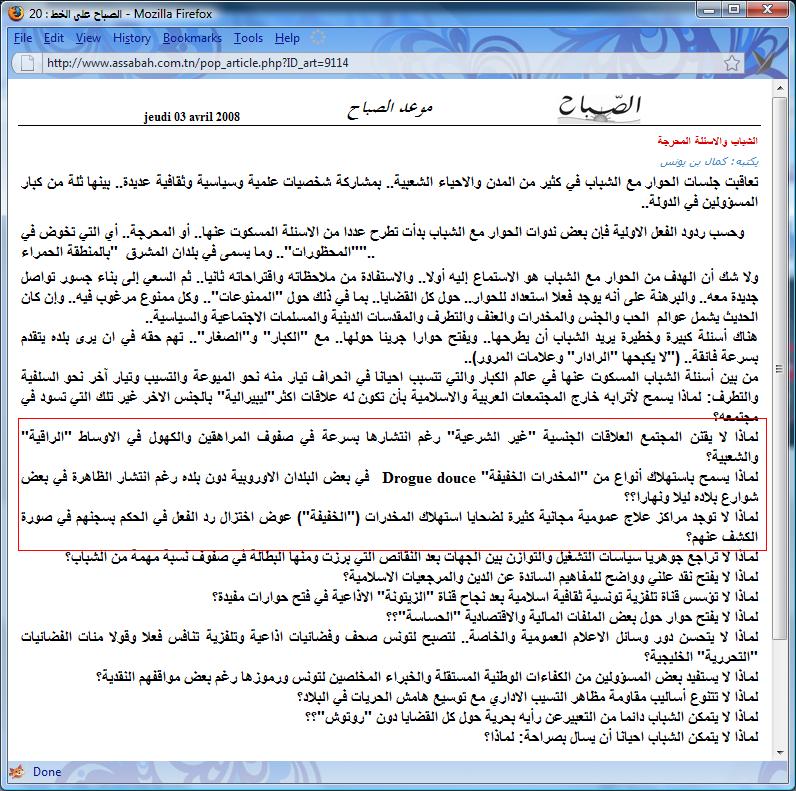
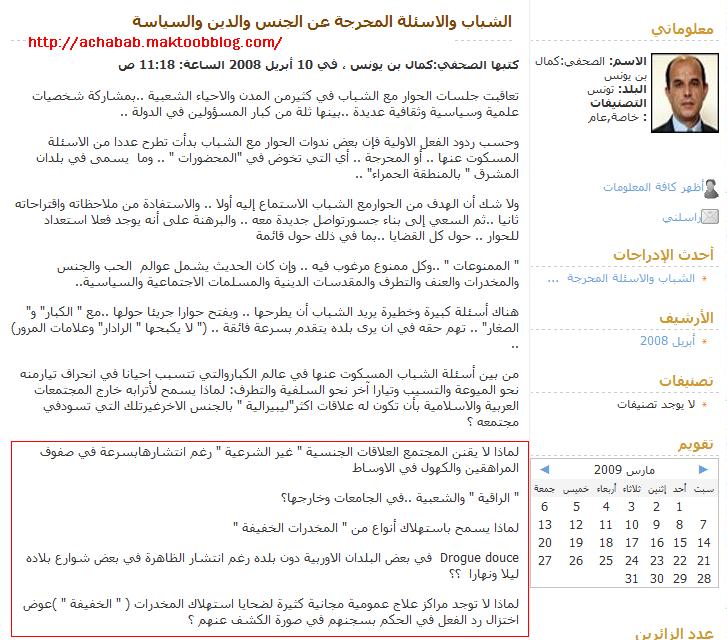
فهاهو المسمّى كمال بن يونس يطالب ضمنيا في مقال بعنوان "الشباب والأسئلة المحرجة" صدر بجريدة الصباح بتاريخ 03 أفريل 2008 (هنا) ونشره على مدوّنته (هنا)، بالسماح باستهلاك المخدّرات "الخفيفة". وأتذكّر أنّني قرأت له مقالا آخر صدر بعدما تمّ القبض على بضعة تلامذة في المرحلة الإعدادية يستهلكون المخدّرات، يطالب فيه بشكل واضح وصريح بالسماح باستهلاك بعض أنواع المخدّرات (ولكن للأسف رغم بحثي الطويل، لم أجده في أرشيف الصحيفة)! أليس هذا هو ما يسمّى ب"آخر الطبّ الكيّ"!
ألا يخجل المنادون -وهم كثر- بمثل هذه "الحلول" الخطيرة والاجرامية في حق أجيال بكاملها، من أنفسهم في الوقت الذي وجب عليهم وعلى الجميع مواطنين ومسؤولين، عائلات ومؤسّسات، مواجهة الأمر بكل حزم وصرامة والوقوف صفا واحدا في وجه هذه الظواهر ومعالجتها بالشكل القانوني والتربوي المناسب عوض استيراد حلولٍ الغرب نفسه لا يقرّ بنجاعتها. وقد كتب (هنا) المسمّى كمال بن يونس حول هذا الموضوع (ولعلّ من غرائب الأمور أن يكتب الشخص فكرة ونقيضها دون أن ينتبه للفرق بينهما!). الأمر خطير، خطير، خطير فيا قوم ألا تتفكّرون؟!!!
بعد ظهور اللّيدي فوفو دايفد سلطان على الجزيرة في برنامج الإتّجاه المعاكس لتناقش موضوع صراع الحضارات في مواجهة شيخ أزهري وتقيّأت على الهواء أطروحات إسلاموفوبيّة مكرّرة صدمت المسلمين من طنجة إلى جاكرتا لأنّها خرجت من فم امرأة كانت تعتبر عربيّة سوريّة مسلمة، تلقّفتها وسائل الإعلام الغربيّة وصنعت منها بطلة إصلاحيّة لا يشقّ لها غبار. وفي تدوينة اليوم، أعرض عليكم مقالا صدر في النيويورك تايمز (وما أدراك ما النيويورك تايمز) بعد أيّام قليلة من ظهورها -اللّيدي- على شاشة الجزيرة (في برنامج الإتّجاه المعاكس، حلقة 21 فيفري 2006). هذا المقال يتحدّث عن وفاء سلطان، المرأة المكافحة، الشجاعة، صاحبة قضيّة، الرّاغبة في إصلاح الإسلام العنيف والوحشي. صدر المقال بعنوان "تهديدات عنيفة ضدّ المسلمين الذين يقولون أنّ العنف يهدم الإسلام" في العاشر من مارس 2006 (أيّ بعد حوالي ثلاثة أسابيع من ظهورها على الجزيرة) وكتب هذا المقال الصحفي جون م. برودر (John M. Broder).For Muslims Who Says Violence Destroys Islam, Violence ThreatsBy John M. Broder
LOS ANGELES, March 10 — Three weeks ago, Dr. Wafa Sultan was a largely unknown Syrian-American psychiatrist living outside Los Angeles, nursing a deep anger and despair about her fellow Muslims.Today, thanks to an unusually blunt and provocative interview on Al Jazeera television on Feb. 21, she is an international sensation, hailed as a fresh voice of reason by some, and by others as a heretic and infidel who deserves to die.
In the interview, which has been viewed on the Internet more than a million times and has reached the e-mail of hundreds of thousands around the world, Dr. Sultan bitterly criticized the Muslim clerics, holy warriors and political leaders who she believes have distorted the teachings of Muhammad and the Koran for 14 centuries.
She said the world's Muslims, whom she compares unfavorably with the Jews, have descended into a vortex of self-pity and violence.
Dr. Sultan said the world was not witnessing a clash of religions or cultures, but a battle between modernity and barbarism, a battle that the forces of violent, reactionary Islam are destined to lose.
In response, clerics throughout the Muslim world have condemned her, and her telephone answering machine has filled with dark threats. But Islamic reformers have praised her for saying out loud, in Arabic and on the most widely seen television network in the Arab world, what few Muslims dare to say even in private.
"I believe our people are hostages to our own beliefs and teachings," she said in an interview this week in her home in a Los Angeles suburb.
Dr. Sultan, who is 47, wears a prim sweater and skirt, with fleece-lined slippers and heavy stockings. Her eyes and hair are jet black and her modest manner belies her intense words: "Knowledge has released me from this backward thinking. Somebody has to help free the Muslim people from these wrong beliefs."
Perhaps her most provocative words on Al Jazeera were those comparing how the Jews and Muslims have reacted to adversity. Speaking of the Holocaust, she said, "The Jews have come from the tragedy and forced the world to respect them, with their knowledge, not with their terror; with their work, not with their crying and yelling."
She went on, "We have not seen a single Jew blow himself up in a German restaurant. We have not seen a single Jew destroy a church. We have not seen a single Jew protest by killing people."
She concluded, "Only the Muslims defend their beliefs by burning down churches, killing people and destroying embassies. This path will not yield any results. The Muslims must ask themselves what they can do for humankind, before they demand that humankind respect them."
Her views caught the ear of the American Jewish Congress, which has invited her to speak in May at a conference in Israel. "We have been discussing with her the importance of her message and trying to devise the right venue for her to address Jewish leaders," said Neil B. Goldstein, executive director of the organization.
She is probably more welcome in Tel Aviv than she would be in Damascus. Shortly after the broadcast, clerics in Syria denounced her as an infidel. One said she had done Islam more damage than the Danish cartoons mocking the Prophet Muhammad, a wire service reported.
DR. SULTAN is "working on a book that — if it is published — it's going to turn the Islamic world upside down."
"I have reached the point that doesn't allow any U-turn. I have no choice. I am questioning every single teaching of our holy book."
The working title is, "The Escaped Prisoner: When God Is a Monster."
Dr. Sultan grew up in a large traditional Muslim family in Banias, Syria, a small city on the Mediterranean about a two-hour drive north of Beirut. Her father was a grain trader and a devout Muslim, and she followed the faith's strictures into adulthood.
But, she said, her life changed in 1979 when she was a medical student at the University of Aleppo, in northern Syria. At that time, the radical Muslim Brotherhood was using terrorism to try to undermine the government of President Hafez al-Assad. Gunmen of the Muslim Brotherhood burst into a classroom at the university and killed her professor as she watched, she said.
"They shot hundreds of bullets into him, shouting, 'God is great!' " she said. "At that point, I lost my trust in their god and began to question all our teachings. It was the turning point of my life, and it has led me to this present point. I had to leave. I had to look for another god."
She and her husband, who now goes by the Americanized name of David, laid plans to leave for the United States. Their visas finally came in 1989, and the Sultans and their two children (they have since had a third) settled in with friends in Cerritos, Calif., a prosperous bedroom community on the edge of Los Angeles County.
After a succession of jobs and struggles with language, Dr. Sultan has completed her American medical licensing, with the exception of a hospital residency program, which she hopes to do within a year. David operates an automotive-smog-check station. They bought a home in the Los Angeles area and put their children through local public schools. All are now American citizens.
BUT even as she settled into a comfortable middle-class American life, Dr. Sultan's anger burned within. She took to writing, first for herself, then for an Islamic reform Web site called Annaqed (The Critic), run by a Syrian expatriate in Phoenix.
An angry essay on that site by Dr. Sultan about the Muslim Brotherhood caught the attention of Al Jazeera, which invited her to debate an Algerian cleric on the air last July.
In the debate, she questioned the religious teachings that prompt young people to commit suicide in the name of God. "Why does a young Muslim man, in the prime of life, with a full life ahead, go and blow himself up?" she asked. "In our countries, religion is the sole source of education and is the only spring from which that terrorist drank until his thirst was quenched."
Her remarks set off debates around the globe and her name began appearing in Arabic newspapers and Web sites. But her fame grew exponentially when she appeared on Al Jazeera again on Feb. 21, an appearance that was translated and widely distributed by the Middle East Media Research Institute, known as Memri.
Memri said the clip of her February appearance had been viewed more than a million times.
"The clash we are witnessing around the world is not a clash of religions or a clash of civilizations," Dr. Sultan said. "It is a clash between two opposites, between two eras. It is a clash between a mentality that belongs to the Middle Ages and another mentality that belongs to the 21st century. It is a clash between civilization and backwardness, between the civilized and the primitive, between barbarity and rationality."
She said she no longer practiced Islam. "I am a secular human being," she said.
The other guest on the program, identified as an Egyptian professor of religious studies, Dr. Ibrahim al-Khouli, asked, "Are you a heretic?" He then said there was no point in rebuking or debating her, because she had blasphemed against Islam, the Prophet Muhammad and the Koran.
Dr. Sultan said she took those words as a formal fatwa, a religious condemnation. Since then, she said, she has received numerous death threats on her answering machine and by e-mail.
One message said: "Oh, you are still alive? Wait and see." She received an e-mail message the other day, in Arabic, that said, "If someone were to kill you, it would be me."
Dr. Sultan said her mother, who still lives in Syria, is afraid to contact her directly, speaking only through a sister who lives in Qatar. She said she worried more about the safety of family members here and in Syria than she did for her own.
"I have no fear," she said. "I believe in my message. It is like a million-mile journey, and I believe I have walked the first and hardest 10 miles."
- عرض تسجيل حلقة الإتّجاه المعاكس الذي نشرته ميمري أكثر من مليون مرّة.
- قالت وفاء سلطان أنّ الصراع بين الإسلام والغرب هو صراع بين عقليّة العصور الوسطى وعقليّة القرن الواحد والعشرين [نقل الصحفي هذه الفكرة بطريقتين مختلفين أولاها تأويلا وثانيها نقلا حرفيا على لسان صاحبتها].
- أنّ علماء وفقهاء العالم الإسلامي يكفّرونها فيما تعتبره فتوى صريحة [بإهدار دمها] لذلك فهي تتعرّض إلى التهديد بالقتل عبر هاتفها وبريدها الإلكتروني وهي خائفة على سلامة أهلها وأقاربها في الولايات المتّحدة وسوريا على حدّ سواء [هنا يريد الصحفي التأكيد على خطورة وضعيّة وفاء سلطان بعدما أقدمت على قول رأيها بصراحة وكذلك على الطبيعة غير المتسامحة للإسلام والمسلمين وتأصّل العنف فيهم. وهو ما يفسّر كذلك العنوان الناري للمقال].
يقول صاحب المقال ما يلي:
The other guest on the program, identified as an Egyptian professor of religious studies, Dr. Ibrahim al-Khouli, asked, "Are you a heretic?" He then said there was no point in rebuking or debating her, because she had blasphemed against Islam, the Prophet Muhammad and the Koran.Dr. Sultan said she took those words as a formal fatwa, a religious condemnation. Since then, she said, she has received numerous death threats on her answering machine and by e-mail.
إبراهيم الخولي: ملحدة؟
وفاء سلطان: ولكنني أحترم حق الآخر في أن يؤمن بها..
إبراهيم الخولي: ملحدة يعني.. ملحدة؟
وفاء سلطان: تستطيع أن تقول ما شئت..
إبراهيم الخولي: أنا بأسألك..
وفاء سلطان: أنا إنسانة علمانية لا أؤمن بالغيبيات..
إبراهيم الخولي: أنا بأسألك لأعاملك بمنطقك، إن كنتِ ملحدة فلا عتب عليكِ إن سببتِ الإسلام ونبي الإسلام وقرآن الإسلام..
وفاء سلطان: هذا أمر شخصي لا علاقة لك به..
Right, playing the Rushdie card for well-meaning but naive Westerners by calling statements made during a TV debate a "formal fatwa" because the immediate association is "death sentence". Fatwas are legal rulings in Islamic jurisprudence and are issued as a response to a specific legal question. A quick overview of what is and is not a fatwa can be found here:
Every Muslim may be entitled to declare an opinion on whatever he or she wishes. But a fatwa is not a point of view; it is a legal opinion. A fatwa is not personal advice given in response to a personal problem and it is not simply an answer to a question. A fatwa is a non-binding legal opinion issued in response to a legal problem. For instance, if one asks, "How many times a day do Muslims pray?" The answer to this is not a fatwa. If one asks: "Do you think it is a good idea to marry someone older than myself?" The response to this is personal advice but not a fatwa. However, if one inquires about a problem that is the proper subject of a legal inquiry, then one is asking for a fatwa. For example, if one asks, My father is opposed to my marrying this man, but legally, could I still marry him anyway?" This question solicits a fatwa. A fatwa assumes a conflict of evidence and a need to weigh and evaluate the evidence. In the language of fiqh, a fatwa is issued in response to a problematic matter (amr mushkil). The point is well-illustrated by the following incident: A man asked al-lmam Malik about a matter. Imam Malik responded by saying, "I don't know." The man retorted, "But this is a simple and easy matter." Irritated Imam Malik said: "Nothing is easy in knowledge and fatwa.Fatwas are not religious condemnations, they are formal legal opinions. Dismissing someone in a TV debate by calling them a blasphemer does not mean you have issued a fatwa calling for their death. It is extremely important that Western readers understand this distinction, as it is obviously being glossed over in the media.
- تذكير بتفاصيل الإغتيال المزعوم للأستاذ يوسف اليوسف بتفاصيله المعتادة في فصل دراسي بجامعة حلب وكيف مثّل ذلك نقطة تحوّل إلى غير رجعة في حياة وفاء سلطان [وهنا لابدّ من التساؤل حول السبب وراء التكرار المتواصل لهذه القصّة المختلقة: في الحقيقة، الأمر لا يتعلّق فقط بمحاولة تشويه الإسلام وإن كان ذلك بديهيّا، وإنّما القارىء الغربي في حاجة أيضا لتبرير يقنعه كيف يمكن لمسلمة تعترف بأنّها سليلة عائلة متديّنة وملتزمة نشأت ودرست وقضّت الجزء الأكبر من حياتها في مجتمع مسلم، تنقلب إلى النقيض تماما بهذا الشكل].
- تذكير بالمقارنة التي قامت بها وفاء سلطان بين اليهود المسالمين، نظيفي الأيدي الذين تمكّنوا من إقناع العالم بعدالة قضيّتهم عبر العمل والإنتاج والمسلمين الذين يجعلون التعاليم الدينية مصدر كل شيء في حياتهم ولا يتحرّجون من ارتكاب المجازر وتفجير أنفسهم بغاية دخول الجنّة.
- ذكر أيضا كيف أنّ وفاء سلطان أصبح مرحّبا بها في تل أبيب أكثر من دمشق وكيف تلّقى الكونغرس الأمريكي لليهود ما قالته بكل ارتياح وبناءً على ذلك تمّت دعوتها إلى محاضرة في شهر ماي 2006 في إسرائيل [لأهميّة الرسالة التي تروّج لها - بالنسبة لهم طبعا]. هل فهمتم الآن لماذا حلّت فوفو مفيد أحمد -المرأة النكرة- ضمن قائمة المائة شخص الأكثر تأثيرا في هذا العالم لسنة 2006؟
تجدون في التسجيل الموالي خطابا لوفاء سلطان بتاريخ 03 ماي 2007 (لوس انجلس، كاليفورنيا)، تقدّم فيه نفسها للجمهور الذي يساند آرائها وتقول بالحرف الواحد ما يلي:
Since then, I have been trying to define the Muslim God and his teachings scientifically. I have lost hope for Islam and I think it is the duty of all free thinkers to be blunt and straight forward in their effort to enlighten the Muslims. (...) My goal is to carry my message on. And hoping, I will be able to bridge the gap between Islam and the rest of the World.
Je n’ai aucun espoir à l’égard de l’islam car quand une idée est corrompue, on ne peut pas la réformer, mais on peut en changer. Il est possible de changer l’esprit qui croyait en cette idée. On peut remplacer cette idée ou ce système de pensée par un meilleur système de pensée. Vous ne pouvez pas réformer une idée corrompue : elle est corrompue. Jetez-la et remplacez-la par une meilleure idée.
وقبل ذلك نقلت صحيفة ذي سيدني مورنينغ هيرالد (The Sydney Morning Herald) في مقال بعنوان "مرحبا بكل الناجحين في الإختبار" ونشر بتاريخ 27 أوت 2007 [مقال حول الهجرة إلى أستراليا]، ما يلي:
The Syrian-born Sunni Muslim Dr Wafa Sultan has recently completed a visit to Australia, jointly sponsored by some Christian and Jewish groups. In response to questions, she has advocated the end of Muslim immigration to Western democracies - believing that the practitioners of her former faith want to destroy Western civilisation. Yet as one participant put it at a function which Sultan addressed, she was only able to leave Syria and settle in the United States almost two decades ago because American officials were prepared to give a Syrian Muslim the kind of chance which she now believes that others like her should not be given.
Sultan's message about radical Islamism is important and she is a courageous critic of jihadist terrorism and societies such as Syria. It's just that she has nothing to tell Australia about immigration. Australia is an immigrant nation which is close to Indonesia, which happens to have the largest Muslim population in the world. Realistically, Australia cannot say that immigrants are welcome, except for followers of Islam. Nor would Australia want to - since many Muslims have become fine residents and citizens, including the Turks who were the first group of Muslims to settle in Australia in large numbers.
خارج النص (رسالة إلى أصحابها): أليس لديكم ما تدافعون به على سيّدتكم يا حرافيش؟!
Wafa Sultan
By Asra Q. Nomani
As a writer-activist who has fought for the rights of Muslim women, I thought I knew my fellow bad girls of Islam. But Wafa Sultan, 47, has given new meaning to the word bad. A psychiatrist in Syria before transplanting to Southern California in 1989 with her family, she gave an interview with al-Jazeera a couple of months ago that made her a household name in the Islamic world. "The clash we are witnessing around the world is ... a clash between a mentality that belongs to the Middle Ages and another that belongs to the 21st century," she said. "It is a clash between freedom and oppression."
The interview raced across the Internet and landed Sultan in the New York Times and Los Angeles Times and on CNN. I connected with her anger and pain. She questioned Islam in 1979, when, she says, she witnessed the murder of a professor by men with alleged ties to the ultraconservative Muslim Brotherhood political group. I challenged Islamic traditions after my friend and former colleague Daniel Pearl was murdered in 2002. Both killings were punctuated with "Allah is great." We have differences: Sultan blames Islam; I blame Muslims. But we both believe the Muslim world is in the Dark Ages.Sultan's influence flows from her willingness to express openly critical views on Islamic extremism that are widely shared but rarely aired by other Muslims. She hopes to publish a book and start a foundation to take the politics out of Islam and "change the mentality of Muslim people." She plans to continue speaking out in Arabic to try to free Muslims from "brainwashing." "I even don't believe in Islam," she says, "but I am a Muslim." By so sharply voicing her beliefs, Sultan crystallizes the mission for the rest of us who want to take the slam out of Islam.
Nomani is the author of Standing Alone: An American Woman's Struggle for the Soul of Islam.
تشاهدون في الجزء الثاني من هذه التدوينة فيديو لمائدة مستديرة عقدها كاتب أمريكي يسمّى دايفد هوروفيتز (David Horowitz) وهو شيوعي سابق يتبنّى حاليا فكر المحافظين الجدد (؟؟). وهو أحد المؤسّسين والمشاركين في العديد من مشاريع الشبكات التي تهاجم الإسلام على الانترنيت (مدوّنات، صحف، ...). وقد حلّت السيّدة وباء سلطان ضيفة شرف على هذه المائدة المستديرة التي تتناول موضوع "المرأة في الإسلام". وكما يقول المثل "الطيور على أشكالها تقع".
I have decided to fight Islam; please pay attention to my statement; to fight Islam, not the political Islam, not the militant Islam, not the radical Islam, not the Wahhabi Islam, but Islam itself...Islam has never been misunderstood, Islam is the problem....[Muslims] have to realize that they have only two choices: to change or to be crushed.
وثمّة سؤال آخر يحتاج إلى إجابة: تقول هذه الدمية بأنّها ملحدة ومعنى ذلك أنّها لا تؤمن بأيّ دين أو إلاه. إذن ما الذي يدعوها إلى الخوض في عقائد الآخرين؟ فهل من المعقول أن ترى طبيبا يعمل عمل مجوهراتي؟ ثم لماذا دعت الرّب لمباركة الحاضرين ومباركة أمريكا في آخر خطابها؟ هل يؤمن الملاحدة أيضا بالدعاء وببركة إلاه لا يعتقدون أصلا في وجوده؟
هي أسئلة كثيرة تكشف بعضا من جوانب دمية السيليكون "وباء سلطان" التي يوظّفها اللّوبي الإسرائيلي واليمين المسيحي الغربي لغايات ومخطّطات أضحت معروفة ومكشوفة للكثيرين شرقا وغربا. وإلى لقاء قريب في حلقة قادمة حول السيّدة الشجاعة!
من هي وفاء سلطان؟ اممممم سؤال وجيه وجدير بالبحث والتنقيب...
WAFA SULTAN: Reformist or opportunist?Unlikely journey from obscurity to fame, rags to riches.
She has been described as a hero, a reformist, a crusader, and a brave woman who defied the Muslim world and stood up for what she believed in. In 2006, Time Magazine named her one of the 100 most influential people "whose power, talent or moral example is transforming the world." Dr. Wafa Sultan has been honored countless times for her now famous appearance on Al-Jazeera television opposite a Muslim cleric named Dr. Ibrahim Al-Khouly on February 21, 2006.
In that memorable clip widely distributed by MEMRI (Middle East Media Research Institute), Sultan referred to the current conflict between the West and militant Muslims as "a clash between a mentality that belongs to the Middle Ages and another that belongs to the 21st century... a clash between civilization and backwardness, between the civilized and the primitive, between barbarity and rationality." The clip spread through the internet like wild fire and landed Sultan in the LA Times, the New York Times and CNN among others. MEMRI estimated that the video was viewed at least one million times.
All of a sudden, and out of obscurity, Sultan found herself the center of both attention and controversy. On the one hand, she became the darling of many right wing media pundits and mainly pro-Israel groups who viewed her as a beacon of reform that stood up to what was wrong with Islam and Muslims. On the other hand, Muslims contended that by making broad, unfounded and ignorant proclamations about their faith, Sultan was nothing more than a pawn playing into the hands of Islamophobes, and an opportunist who intentionally pushed the divide between the Islamic world and the West to further ulterior motives that included fame, fortune and immortality.
Reformist or opportunist, Sultan continues to enjoy the spotlight as she routinely figures prominently as a guest speaker at many functions and fundraisers across the country. As her fame grows, so do her admirers and detractors.
Born in 1958 in the coastal town of Baniyas, Syria, Wafa Sultan grew up in a modest middle class Alawite family. She attended the University of Aleppo where she majored in medical studies (source: wikipedia).
In an interview with the New York Times, Sultan claimed that in 1979, gunmen from the Muslim Brotherhood burst into a classroom at the university and killed her professor before her eyes. It was then that her disillusionment and anger with Islam started. According to the same interview, Sultan, her husband Moufid, who goes by the Americanized name David, and their two children applied for a visa to the United States in 1989 and eventually settled in with friends in Cerritos, Calif.
Post 9/11, Sultan reportedly began writing for an Islamic reform Web site called Annaqed (The Critic) run by a Syrian expatriate in Phoenix. She wrote an angry essay about the Muslim Brotherhood and her writings eventually drew the attention of Al-Jazeera television, which invited her to debate, first an Algerian Islamist in July 2005 and then Dr. Ibrahim Al-Khouly, a lecturer at the prestigious Al-Azhar University, in February 2006 (New York Times, March 11, 2006).
It was the second debate, excerpts of which were translated and circulated by MEMRI that garnered her worldwide attention. Sultan went from obscurity to fame in a matter of weeks.
While Sultan’s admirers have nothing but praise for her, detractors charge that many of her public claims do not corroborate with facts. Moreover, they assert that the reasons behind her rise to fame have more to do with her personal life than with her desire to reform Islam.
Adnan Halabi*, a Syrian expatriate who met and got to know the Sultans when they first came to the United States, spoke at length about the Wafa Sultan that very few people know.
According to Halabi, Dr. Wafa Ahmad (her maiden name) arrived in California with her husband Moufid (now changed to David) in the late 80s on a tourist visa. Contrary to what she told the New York Times, they came as a couple, leaving their two children back in Syria.
Another source named Nabil Mustafa, also Syrian, told InFocus that he was introduced to Moufid Sultan through a personal friend who knew the family well, and both ended up having tea at the Sultans’ one-bedroom apartment one evening in 1989. It was then that Moufid told Mustafa the story of how he was reunited with his two children. According to Mustafa, Moufid Sultan told him that a short time after they arrived in the country, his wife, Dr. Wafa Sultan, mailed her passport back to her sister Ilham Ahmad in Syria (while the passport still carried a valid U.S. tourist visa). With Ilham bearing a resemblance to her sister Wafa, the plan was to go to the Mexican Embassy in Damascus and obtain a visa to Mexico, making sure that the airline carrier they would book a flight on would have a layover somewhere in the Continental United States.
With an existing U.S. visa on Wafa Sultan’s passport, Ilham Ahmad had no trouble obtaining an entry permit to Mexico. Shortly after, Ilham and Wafa’s two children landed in Houston, Texas. She and the children then allegedly made their way through customs and were picked up by Moufid and brought to California.
Taking advantage of an amnesty law for farmers, the Sultans applied for permanent residency through a Mexican lady who worked as a farm hand. She helped Moufid with the paperwork by claiming he had worked as a farmer for four years. The application went through and the Sultans obtained their green cards.
As incredible as the story sounds, Mustafa told InFocus that to the best of his recollection, this was the exact account he heard from Moufid Sultan. Halabi, who is not acquainted with Mustafa, corroborated the story, which he heard from Dr. Wafa Sultan herself but with fewer details. Dr. Wafa Sultan declined InFocus’ repeated requests to be interviewed or comment on the allegations. InFocus contacted the Immigration and Customs Enforcement (ICE) to check on the veracity of the story but an official said that they would look into the allegations, which could take months to investigate.
Halabi alleges that Ilham Ahmad lived as illegal resident with her sister Wafa for years until she met an Arab Christian named Khalid Musa Shihadeh whom she ended up marrying (they were married in Nevada on 12/8/1991 and filed for divorce in 2002). It was during that time that Halabi got to know the Sultans well.
Halabi alleges that the Sultans lived in dire poverty. "Their rent was over $1,000 per month and Moufid was only making $800," he said. Dr. Wafa Sultan was forced to rent out a room in her apartment and work at a pizza parlor in Norwalk, Calif. where a personal friend used to pick her up and drop her off daily. This same friend used to help the Sultans out with groceries and occasionally loaned them money just so they could make it through the month. "It was a serious struggle," Halabi recalled. "The Sultans lived hand to mouth for years on end." Further, Halabi said that at no point during the period he knew the family did Sultan ever discuss religion, politics or any topic relevant to her current activities. "She is a smart woman, articulate and forceful, but she never meddled in religion or politics to the extent she is doing now," Halabi said.
As to the claim that her professor (thought to be Yusef Al-Yusef) was gunned down before her eyes in a faculty classroom at the University of Aleppo, Halabi said the incident never took place. "There was a professor who was killed around 1979, that is true, but it was off-campus and Sultan was not even around when it happened," he added.
InFocus contacted the University of Aleppo and spoke to Dr. Riyad Asfari, Dean of the Faculty of Medicine, who confirmed Halabi’s account. "Yes, the assassination took place off-campus," he said. Dr. Asfari was keen to add that no one had ever been killed in a classroom anytime or anywhere at the university.
Syrian expatriate Ghada Moezzin, who attended the University of Aleppo in 1979 as a sophomore, told InFocus that she never heard of the assassination. "We would’ve known about the killing if it had happened," she said. "It would have been big news on campus and I do not recall ever hearing about it." Moezzin, who lives in Glendora, Calif., added that government security was always present around the university given the political climate in Syria at the time.
What are perceived as inconsistencies and half-truths like these convince Sultan’s critics that the motive behind her invectives against Islam and Muslims is other than her alleged desire for reform.
These same critics allege that Islamophobes are most certainly behind the likes of Sultan. They argue that the clip that made her famous was distributed by MEMRI, a media group that purports to independently translate and distribute news from the Middle East when in reality it is promoting a pro-Israeli slant. In an article titled, "Selective Memri," published on August 12, 2002 by the British newspaper The Guardian, investigative reporter Brian Whitaker wrote: "The stories selected by MEMRI for translation follow a familiar pattern: either they reflect badly on the character of Arabs or they in some way further the political agenda of Israel."
According to Whitaker, the founder of MEMRI is an Israeli named Yigal Carmon. "Mr - or rather, Colonel - Carmon spent 22 years in Israeli military intelligence and later served as counter-terrorism adviser to two Israeli prime ministers, Yitzhak Shamir and Yitzhak Rabin... of the six people named (as MEMRI’s staff), three - including Col. Carmon - are described as having worked for Israeli intelligence." (The entire article can be obtained at:
http://www.guardian.co.uk/elsewhere/journalist/story/0,7792,773258,00.htmlAnother feature of deliberate bias and media myopia, critics say, is the fact that the Al-Jazeera clip was edited intentionally "out of context" to reflect one single point of view and promote Sultan’s arguments through American-style media sound bites, reducing the other debater to a mere punching bag.
InFocus was able to obtain a translated transcript of the Al-Jazeera debate. An example of this bias critics allege is Sultan’s much-rehashed quote, "It is a clash between civilization and backwardness, between the civilized and the primitive, between barbarity and rationality."
In the transcript, Shaikh Ibrahim Al-Khouli responded by saying, "…here we must ask a question, who facilitated the conflict and indeed initiated it; is it the Muslims? Muslims now are in a defensive position fighting off an aggressor... who said Muslims were backward? They may be backward in terms of technological advances, but who said that such are the criteria for humanity? Muslims are more advanced on a human level, in terms of the values and principles they endorse." (Entire transcript can be viewed at:
http://www.aqoul.com/archives/2006/03/aljazeera_trans.phpInFocus also found out that the web site called Annaqed (www.annaqed.com) she supposedly wrote for before being noticed by Al-Jazeera Television is not an "Islamic reform Web Site" as was reported in the New York Times article, but rather an Arab nationalist blog run by a Syrian Christian who defines it as being "in line with Christian morality and principles." The site is also replete with anti-Muslim writings.
Sultan’s detractors include not only Muslims but members of the Jewish community as well. In an op-ed piece published in the Los Angeles Times (June 25, 2006) and titled "Islam’s Ann Coulter," Rabbi Stephen Julius Stein at Wilshire Boulevard Temple, who attended a fundraiser for a local Jewish organization where Sultan was a speaker, wrote, "The more Sultan talked, the more evident it became that progress in the Muslim world was not her interest.... She never alluded to any healthy, peaceful Islamic alternative."
The rabbi mentioned that Judea Pearl, father of murdered journalist Daniel Pearl, "was one of the few voices of restraint and nuance heard that afternoon. In response to Sultan’s assertion that the Koran contains only verses of evil and domination, Pearl said he understood the book also included ‘verses of peace’ that proponents of Islam uphold as the religion’s true intent. The Koran’s verses on war and brutality, Pearl contended, were ‘cultural baggage,’ as are similar verses in the Torah."
He added, "Sultan’s over-the-top, indefensible remarks at the fundraiser, along with her failure to mention the important, continuing efforts of the Islamic Center (of Southern California), insulted all Muslims and Jews in L.A. and throughout the nation who are trying to bridge the cultural gap between the two groups. And that’s one reason why I eventually walked out of the event."
In the end, Dr. Wafa Sultan will remain a conflicting figure. Loved by some, reviled by others, she does not seem to be afraid to voice her opinions. She once said, "I don’t believe you can reform Islam," and claimed that the Qur’an was riddled with violence, misogyny and extremist ideas. Her Muslims detractors believe Sultan does not even qualify as a Muslim reformer since she has publicly rejected Islam and declared herself an atheist.
As for the Sultans’ financial troubles, Halabi told InFocus that ever since Dr. Sultan gained notoriety those troubles are a thing of the past. "She bought a house for herself and bought another for her son," Halabi said. "She also bought two smog-check stations, one for her husband and another for her son," he added. When asked about the source of her material well-being, Halabi was unsure.
As to the reasons that may have pushed Sultan to be so outspoken and vocal against Islam in a post-9/11 world, Halabi sympathetically remarked, "Poverty. It drives people to sell their soul."
* Adnan Halabi (not his real name) agreed to speak to InFocus on condition of anonymity. To this day, he maintains that he and the Sultans are still friends.
وإن كان المدّ الديني الذي يجتاح المنطقة العربية عبر أحدث وسائل الاتصال وأرخصها يحتمل الغثّ والسمين، المعتدل والمتطرّف، التقدّمي والرجعي فإنّ المدّ التبشيري والتغريبي يعمل في صمت عبر شبكات محكمة تصرف سنويا مئات الملايين من الدولارات واتّخذت أشكال عدة في غزوها لمجتمعات المغرب العربي فاستترت بستار منظّمات أهليّة غير حكومية حينا وهيئات وثيقة الارتباط بالأوساط الكنسيّة خصوصا الانجيليّة منها أحيانا أخرى. مع كل هذا النشاط الصامت والزخم المحموم من العمل التنصيري الذي كشفه الإعلام الغربي وسكت عنه إعلامنا بطريقة تطرح ألف سؤال وسؤال، نشهد أيضا جهدا محموما آخر من لدن بعض الأوساط التغريبية الإستئصاليّة التي تحمل لواء "الحداثية والتقدّمية" هدفها المباشر أو غير المباشر استيراد كل أوساخ وقاذورات الغرب تحت مسمّيات عدّة منها الحرّية الشخصيّة والانفتاح والتطوّر وما إلى ذلك من الشعارات الرنّانة. وليس غريبا أن يكون هؤلاء الثقفوت من مفكري الدرجة العاشرة ومدّعي الحكمة والعلم هم منظّروا ورأس حربة هذا التيّار الجارف الذي يشتدّ ويشتدّ وعموم الشعب في سبات عميق لا همّ له سوى اللّهث وراء خبز يومه وما لذّ وطاب وانتشر من مباهج الحياة المادية التي ترسّخت شيئا فشيئا عبر الترويج لثقافة الاستهلاك فغدا الإنسان مغيّب العقل، مهمّش المدارك أقرب للحيوان منه إلى الإنسان العاقل.
ورغم أنّ المصل ضدّ الرّجعية الدينية التي يروّجها أشباه الفقهاء وفقهاء السلطان المنتشرين كالجراد في أرض العربان لا يتطلّب أكثر من تحديث مناهج التعليم وإعطاء العلم منزلته التي يستحقّها وإطلاق حرّية البحث والنقد والتأويل فإنّ المدّ التبشيري الغربي الذي وضع نصب أعينه هدف "تنصير كل المسلمين" يفرض تحدّيات جيواستراتجية عملاقة أمام شعوب أنهكها الفقر وأعماها الجهل وأقعدها الخمول وأعجزها الإستبداد.
الكثيرون سيشنّفون آذاننا باتّهامات من قبيل "أنتنّ تروّجن لنظريّة المؤامرة..." وسينبري غالبيتهم في اتّهامنا بأنّنا ضدّ حرّية المعتقد وسيصلون إلى حدّ اتّهامنا بسوء النيّة. لا بأس في ذلك فنحن دوما سيّئات النيّة والطويّة مغرقات في نظريّة المؤامرة إلى حدّ الهلوسة. لكن رغم ذلك ثمّة بعض الأسئلة التي تحتاج إلى إجابة: ما الذي يدعو أكبر قوّة في العالم إلى نشر دينها عبر الأناجيل المترجَمة بعدما فرشت أرض البلدان التي اجتاحتها بالقنابل العنقوديّة والذخائر الاختراقيّة؟ ما الذي يدعو مئات هيئات "الإغاثة" الإنسانيّة إلى التورّط في أعمال تبشير وتنصير في السودان وساحل العاج ودول إفريقيا جنوب الصحراء حيث تشير الأرقام إلى تحوّل ستّة ملايين إفريقي سنويا إلى المسيحيّة؟ ما الذي يدعو الكونغرس الأمريكي لإحداث لجنة تهتمّ بنشر المسيحيّة وتُموّلها من أموال دافعي الضرائب المؤمنين والملحدين على حدّ سواء (في ما يسمّى بأعرق ديمقراطيّة علمانية غربية!)؟ ما الذي يدعو الولايات المتحدة وفرنسا لشنّ حملة إعلاميّة مسعورة ضدّ الجزائر عقب إصدارها لقانون يمنع التبشير؟ ما الذي يدفع الدول الغربية وخصوصا الولايات المتّحدة لإثارة "مشكلة" الأقباط المصريين الذين يعيشون منذ عشرات القرون في أمن وأمان جنبا إلى جنب مع المسلمين؟ ثم ما الذي يدفع الدول الغربية للضغط على الدول الخليجيّة لتوطين المهاجرين (وأكثرهم مسيحيّون) وإعطائهم حقّ الحصول على الجنسيّة والملكية المطلقة (انظر هنا وهنا)؟ وما الذي يخفيه توجّه الولايات المتحدة إلى الأمم المتّحدة من أجل تغيير قوانين المنظّمة الدولية وإضافة صيغ التدخّل العسكري لحماية الأقلّيات العرقيّة والدينيّة ولأسباب إنسانيّة، لميثاقها؟ أليس من الأفضل لهم التدخّل لدى إسرائيل لحماية الفلسطينيين أوّلا؟
يكشف تقرير للجزيرة (انظر الفيديو الأوّل) تورّط الجيش الأمريكي في عمليّات تبشير يقوم بها سرّا في أفغانستان وتموّلها وزارة الدفاع الأمريكيّة. ويتذكّر الكثيرون العبارة الشهيرة لراعي البقر المتخلّي "هذه حرب صليبيّة ضدّ محور الشر" ومحور الشرّ هذا هو الإسلام بكل أبعاده الحضارية والإنسانية والتاريخية. قالها الرئيس السكّير الذي تغلّب بفضل السيّد المسيح -عليه السلام- على جاذبيّة الكأس وتمكّن من أن يصل إلى موقع القيادة في الدولة الأكبر والأقوى في العالم بعتادها وغطرستها وأيضا علمها للأسف. وليس من المفارقة أن يستعمل هذا الرئيس المتديّن جدًّا جدًّا نفس عبارة سابقه ريغان "محور الشر" عندما تعلم أنّ كليهما إنجلييّان حتى النخاع ووصلوا إلى الرئاسة بفضل أصوات الأمريكيّين الإنجليّين. وفي نفس هذا الإطار، ما أعلمه عن الدولة الديمقراطيّة العلمانيّة هي أنّها تفرّق بين أنظمة الدولة ودين المواطن وهذا يعني أنّه من غير المعقول أن تطلق هذه الدولة حربا أحد أسبابها دينيّة وإلا لأصبحت دولة ثيوقراطيّة هي الأخرى. ثم هل من المعقول أن يقوم هذا الرئيس المتديّن بالصلاة مع أعضاء الكونغرس -في مبنى الكونغرس ذاته وعبر شاشات التلفزيون- قبل أن يبدأ خطابه؟ حالة علمانية فريدة أليس كذلك؟ تفصيل آخر تصعب ملاحظته رغم أهميّته: لماذا نجد في النشيد الرّسمي الأمريكي دعاء للرّب لحماية ومباركة الوطن؟ لماذا نجد على الدولار الأمريكي عبارة (in god we trust) أو ما معناه "في الرّب نثق/نؤمن". ثم لماذا يقول الرئيس الأمريكي (أيّ رئيس) بعد نهاية كل خطاب (God bless America) أو "ليبارك الرّب أمريكا"؟ نادرا ما سمعت مثل هذا الدّعاء عقب خطابات رؤسائنا الميامين! أليس كل ذلك دلالات واضحة على أن ما يصدر عن الولايات المتحدة من إيديولوجيات وممارسات تجد لها جذورا دينيّة واضحة؟ لماذا إذن من حقّهم هم أن يبنوا دولة مؤمنة (عبر حروبهم الصليبية وجيوش تبشيرهم وصلواتهم الصباحيّة المسائيّة) ومن واجب المسلمين التخلّي عن إيمانهم حتى يعجبوكم ويعجبوهم؟
الفيديو الخامس: حول اضطهاد المسيحيّين الجدد
وكخلاصة لهذا الموضوع، لا بدّ من قول ما يلي:
- من حقّ كل شخص أن يغيّر دينه كما يريد شريطة أن يحترم أديان الآخرين.
- ليس من حق أيّة حكومة أو هيئة أو منظمة أجنبيّة القيام بعمليات تبشير على التراب الوطني مهما كانت النيّة وراء ذلك حسنة.
- ما يحدث الآن في المغرب العربي من عمليّات تبشير انجيليّة في أغلبها، مدعومة سياسيا وإعلاميا وماديا هي خطّة ليس فقط لتنصير المسلمين وإنّما أيضا لزعزعة السلم والاستقرار الأهلي في المنطقة بإيقاظ الحساسيّات الإثنيّة وتأليب العقائد الدينيّة لأهداف عديدة لا تخفى على كلّ ناظر متبصّر. وعليه على الدولة الوطنية أن تتصدّى لمثل هذا التيّار التخريبي الذي يستهدف الأمن الوطني في مقتل بالإجراءات المناسبة ودون تأخير لأن البشائر الأولى للمرض بدأت بالظهور (الحديث عن التونسيّين الأمازيغ، الأباضيّة في جزيرة جربة، إلخ) وأخشى ما أخشاه أن يكون الوقت متأخّرا على إيجاد حلّ لمواجهة هذه المعضلة.
تحيّاتي،
ففي المغرب والجزائر، كما في تونس وليبيا، لا وجود لأقليات مسيحية منذ غادر المستوطنون الأوروبيون المنطقة في أعقاب نيل بلدانها الاستقلال بين 1952 و1962. ويسود المذهب السُـني المالكي بشكل مطلق في المغرب العربي منذ الفتح الإسلامي، وخاصة منذ أن عمّـمه الإمام سحنون بن سعيد، المدفون في مدينة القيروان.
وتعتقد شخصيات إسلامية تونسية، أن التحدي الذي تُجابهه الهوية الدّينية للمغاربيين بشكل خاص، لا تقل عن تحدّيات الثلث الأول من القرن الماضي، بسبب الدور الذي تلعبه العولمة في تفكيك العلاقات الروحية وهزّ مناعة المجتمع و"خاصة في ظل سَـطوة الفضائيات وما تحمله من قِـيم وافدة، سرعان ما تستهوي الشباب".
واستدل عُـضو في "المجلس الإسلامي الأعلى" (هيئة رسمة أنشأت عام 1988)، فضل عدم الإفصاح عن هويته، بالكشف أخيرا عن جماعة "عبدة الشيطان"، الذين ضبطتهم أجهزة الأمن التونسية في يونيو الماضي في أحياء مختلفة من العاصمة تونس، بينما كانوا يمارسون طقوسهم في سرية تامّـة على أنغام موسيقى "الهارد روك" الصاخبة، واعتبر تلك الحادثة، رغم أنها الأولى من نوعها، "تهديدا لوحدة البلاد الروحية وتقويضا لأحد أركان هويتها"، وذهب إلى حد القول أن ظهور مذاهب ونحل متناحرة، هو الخطوة الأولى التي تسبق دقّ إسفين في جدار الانسجام الدّيني والمذهبي، الذي ميّـز المنطقة المغاربية عن المشرق وجعلها الأكثر استقرارا منذ زوال الدولة الفاطمية (شيعية) من المهدية (200 كيلومتر جنوب العاصمة تونس) سنة 945 للميلاد.
كاثوليك وبروتستانت
ومثلما كان الشبان السبعون، الذين اعتُقلوا في الربيع الماضي في تونس للإشتباه في انتمائهم لجماعة "عبدة الشيطان"، من طلاب الجامعات والمعاهد الثانوية، لُـوحظ أن أعمال التبشير التي تزايدت في الفترة الأخيرة، استهدفت الشريحة الاجتماعية نفسها. غير أن مصادر مطّـلعة على شؤون الدِّيانة المسيحية أكدت لسويس أنفو وجود فوارق جوهرية بين تعاطي الكاثوليك والبروتستانت مع هذه المسألة الدقيقة والملتهبة.
فإذا كان الكاثوليك ينفُـون بشدة إقدامهم على تنصير شبان تونسيين، لأن الكنيسة الكاثوليكية لا تُـبدي حماسة لانضمام الآتين من دِيانات أخرى إليها وتضعهم في الاختبار طيلة سنتين، "أملا بتبريد حماستهم"، على ما قالت تلك المصادر، فإن الأوساط البروتستانتية تقوم بحملات مكثفة لحمل الشبان المغاربيين على اعتناق المسيحية، مستخدمة كل الأسلحة المُـمكنة من حِـصص التلقين والتبشير، إلى الكُـتب والمطبوعات باللغة العربية، التي تُسلم باليد أو تُرسل بالبريد، إلى فتح الكنائس في وجوههم أيام الآحاد، وصولا إلى تسهيل مسار التعميد الذي قد لا يستغرق أكثر من أربع وعشرين ساعة.
وشكا هنري تيسيي (فرنسي)، كبير الأساقفة الكاثوليك في الجزائر من دور البروتستانت مُحملا إياهم المسؤولية عن تدهوُر العلاقات بين الكنيسة والسلطات الجزائرية من دون أن يُسميهم، وقال تيسيي في تصريحات أدلى بها في وقت سابق من الشهر الجاري، إن زيادة نشاط المسيحيين التبشيريين في الجزائر، ذات الغالبية المسلمة، أدّت إلى "مصاعب خطرة"، تحدث بصورة دورية للكاثوليك، "على الرغم من أن الكنيسة شرحت بوضوح أنها غير ضالعة في ذلك"، وعزا بوضوح تشنّـج العلاقات إلى "الحرب ضد التبشير الذي تمارسُـه جماعات تبشيرية"، حسب تعبيره، ومضى قائلا "إن المبشّـرين وصلوا للجزائر، وأول من عانى نتيجة لأفعالهم هم الكاثوليك".
شرارة الخلاف
وكانت الشّـرارة التي أشعلت نار الخلاف الأخير بين السلطات الجزائرية والكنيسة، إقدام الراهب الفرنسي بيير واليز على إقامة مراسيم الصلاة بمسيحيين في مدينة مُغنية، غرب الجزائر القريبة من الحدود مع المغرب، وهي منطقة لا يُسمح فيها بممارسة الشعائر الدّينية غير الإسلامية، والمسيحيون الذين صلّـى بهم هم كاميرونيون مهاجرون بصورة غير شرعية كانوا يقيمون في أخدود، على الحدود مع المغرب، وهم جزء من تجمع من الغانيين والنيجيريين زارهم رهبان كاثوليك في المنطقة على مدى سنوات.
وأدانت محكمة جزائرية واليز وقضت بسجنه سنة واحدة مع وقف التنفيذ، وهو الحُـكم الذي استأنفته الكنيسة. واستند قرار المحكمة على قانون صدر قبل عامين، وحدّد مكان إقامة العبادات غير الإسلامية في مبان محددة توافق عليها الدولة. وكانت السلطات الجزائرية طلبت خلال شهر نوفمبر من العام الماضي من رهبان برازيليين من طائفة "سلام"، مغادرة البلاد في غضون أسبوعين، بعدما اتّـهمتهم بتجاوز القوانين، ثم عدلت عن الإجراء استجابة للمساعي التي قام بها السفير البرازيلي لديها.
ويمكن القول أن القانون الذي سنّـته الجزائر في 26 فبراير 2006، جاء ردّا على تنامي الحركات التبشيرية، وبخاصة في منطقة القبائل، التي اعتنق بعض سكّـانها المسيحية، ما تسبّـب في احتكاكات بين أبناء القرية الواحدة. وبموجب القانون الجديد، يُعاقَـب كل من يُغري المسلم لتبديل دِيانته أو يُشجعه على ذلك، بالسجن من سنتين إلى خمس سنوات وبغرامة تراوح بين خمسة آلاف وعشرة آلاف يورو، كذلك حظَـر القانون إقامة الشعائر غير الإسلامية خارج الأماكن المُخصصة لذلك.
وحذرت الصحافة الجزائرية، وبخاصة الناطقة بالعربية في مناسبات عديدة، من اتِّـساع ظاهرة التبشير، لكن رجال الدّين المسيحيين قلّـلوا من شأنها، وقال مصطفى كريم، رئيس الكنيسة البروتستانتية الجزائرية في تصريح لصحيفة "الوطن" (الناطقة بالفرنسية) عن "عجبه من انزعاج 32 ألف مسجد من 32 طائفة مسيحية صغيرة في الجزائر"، على حدّ قوله، مؤكِّـدا أن "من يقوم بالتبشير، هي الجماعات الإسلامية"، لكن صحيفة "لوموند" الفرنسية اعترفت في تقرير لموفدها إلى الجزائر نشرته يوم 28 فبراير الماضي، أن نشاط الإنجيليين حقيقي في البلد، وأنه يثير قلق الأهالي الذين يصدمهم ارتداد بعض معارفهم عن الإسلام في قُـرى صغيرة، حيث يعرف الناس بعضهم البعض".
وعلّـق المراسل، الذي حجبت الصحيفة اسمه قائلا، إن الجزائريين "يشعرون أن الحاجز الذي يمثله الإسلام، يتعرض للهجوم"، ولعل ما يدل على تنامي عدد مُعتنقي المسيحية في البلد، أن إحصاءات رسمية حديثة أظهرت أن هناك حوالي عشرة آلاف مسيحي في الجزائر ومنهم (بعضهم يعيش خارج البلاد)، عِـلما أن تِـعداد السكان الإجمالي يصل إلى 33 مليونا.
وعزا بوعبدالله غلام الله، وزير الشؤون الدّينية الجزائري تزايد البروتستانت إلى "مؤامرة من الأوساط المسيحية المُتصهيِـنة في الولايات المتحدة الأمريكية تستهدف الجزائر"، مؤكِّـدا أن رجال الدّين البروتستانت يعِـدون من يُقنِـع جزائريا بالتخلي عن الإسلام واعتناق المسيحية، بمكافأة مقدارها 5000 يورو، وعبّـرت جمعية العلماء الجزائريين عن موقف مماثل، فيما اتّـهم غلام الله الإنجيليين بالعمل على تكوين أقلية دينية، لكي تكون ذريعة لاستدعاء الحماية من الخارج.
وفي هذا السياق، بادرت بعض الفعاليات المدنية والسياسية، إلى وضع ملف كامل على مكتب الرئيس بوتفليقة، بُـغية إقناعه بالتدخل لتحصين البلاد من تلك الحملات المنظمة. وحذّرت الفعاليات من استثمار بعض الجهات للظروف الاقتصادية والاجتماعية العسيرة، التي تمرّ بها بعض المناطق في الجزائر، وأتت تلك المبادرة في أعقاب إقدام السلطات الجزائرية على ترحيل القس هيوغ جونسون، على خلفية إدارية، مما دفع نشطين مسيحيين إلى الترويج لما أسموه بالتضييق الذي تتعرّض له الحريات الدينية.
وكان هذا الملف مَـحل تشاوُر بين السلطات الجزائرية ونظيرتها الأمريكية، بمناسبة زيارة ديفيد وولش، مساعد وزيرة الخارجية لشؤون الشرق الأوسط وشمال إفريقيا إلى الجزائر في وقت سابق من العام الجاري، وهو ما دفع وزير الشؤون الدينية والأوقاف بوعبد الله غلام الله إلى التأكيد أن نشاط التبشير الجاري في الجزائر حاليا، لا علاقة له بقرار طرد رئيس الكنيسة البروتستانتية السابق القس هيوغ جونسون، الذي طلبت منه وزارة الداخلية الرحيل بعد انتهاء مدة إقامته في الجزائر.
عشرة مسيحيين في اليوم؟
وأفادت جريدة "الرياض" السعودية في معرض حديثها عن التنصير في الجزائر، أن الأرقام تتحدّث عن عشرة جزائريين يتنصّـرون يومياً، وأكدت أن هذا المدّ الإنجيلي لا يحدث من فراغ، بل "يقع بتوجيه مباشر من قِـبل لجان مختصّـة عالمية، أبرزها لجنة في الكونغرس الأمريكي أقامها المحافظون الجدد"، غير أن مونسنيور تيسيي أكد خلال تحقيق أجرته الإذاعة الجزائرية العمومية حول "ظاهرة التنصير"، أن الجزائر ليست البلد الوحيد المعني بالحركة الإنجيلية، مشيرا إلى أن "أتباع الكنيسة الكاثوليكية فى الجزائر كانوا أكثر المستهدفين" من قبل الإنجيليين.
وكشفت الصحفية الجزائرية فضيلة مختاري بعضا من الأساليب المعتمدة في نشر المسيحية في بلدها، مثل تقديم النصرانية على أنها دين سلام، والإسلام دين إرهاب، وأن المسلمين هم من أدخلوا الجزائر في عشرية الدّم، في إشارة إلى الحرب الأهلية التي مزّقت الجزائر في العقد الماضي.
وأماطت مختاري اللثام في تحقيق نشرته في صحيفة "الشروق" الجزائرية في 30 مارس الماضي، عن مواقع نشاط المبشرين التي تتركّـز في منطقة القبائل، وقالت "إن بعض الأماكن تتحوّل يوم الجمعة إلى كنائس، إذ ينتهز روّادها تفرغ المسلمين للعبادة ليقوموا بأداء طقوسهم".
وأحصت الصحيفة أكثر من 250 شخصا انتقلوا إلى النصرانية في الفترة الأخيرة، من ضمنهم عائلة بأكملها في منطقة البويرة مكوّنة من الأب والأم والأبناء، وصولا إلى الجدة والجد.
وكشفت الصحيفة أيضا أن كل من يذهب إلى الكنيسة في ولاية بجاية (القبائل)، يحصل على مبلغ مالي قدره 1000 دينار جزائري، مقابل أدائه الصلاة يوم الجمعة لعدّة أسباب، منها ضمان توافد المتنصّـرين الجُـدد في مثل هذا اليوم بالذات، كدلالة على تركهم الإسلام.
وفي المغرب أيضا، كشفت صحيفة "التجديد" مؤخرا عن حملة تنصير واسعة في منطقة شتوكة، ذات الأكثرية الأمازيغية، وأفادت أن عائلة مسلمة مؤلفة من 17 فردا انتقلت جماعيا إلى المسيحية بتأثير من ابنها المهاجر العائد من الخارج، وقالت الصحيفة إن المهاجر طلب إجراء مناظرة مع إمام القرية وتمّـت فعلا أمام الأهالي، لكنها تحوّلت إلى سبٍّ للرسول وتهجّـم بذيء على الإسلام.
كذلك امتدت الحملات إلى منطقة الطوارق على الحدود الجزائرية مع مالي والنيجر، وتحدث تقرير جزائري عن عدّة جهات غربية لم تُسمّـها، تعمل تحت يافطة المنظمات الخيرية والجمعيات غير الحكومية التطوعية.
وقال التقرير، إن تلك المنظمات "تعمل من أجل استمالة الشباب والفئات الاجتماعية المُعوزة لاعتناق المسيحية"، وبعدما كانت الحملات تتم ببطء وبعيدا عن الأضواء، باتت اليوم بفضل تطور التكنولوجيا وتقدّم العولمة، تستخدم أحدث الوسائل، مثل شبكة الإنترنت والهواتف النقالة والقنوات الفضائية.
معاودة فتح الكنائس
أما في تونس، فزاد عدد المسيحيين في أعقاب نقل مكاتب "البنك الإفريقي للتنمية" إليها مؤقتا من أبيدجان في مطلع العقد الحالي، وشكل مجيء أعداد كبيرة من الأفارقة المعتنقين للدّين المسيحي مناسبة لمعاودة تنشيط الكنائس، التي كانت مقفلة في العاصمة التونسية.
وقال تونسي يعمل في كنيسة تقع في شارع شارل ديغول، إنه لم يشهد من قبل هذا العدد من التونسيين يُقبلون على قدّاس الأحد في الكنيسة الواقعة في وسط العاصمة، ما حملهم على نقل الصلاة إلى أحد الفنادق في الضاحية الشمالية للعاصمة، لكنه رفض الإدلاء باسم الفندق.
وحاول مندوب سويس إنفو التقاء شاب يُدعى "عماد"، والذي تردّد أنه "دينامو" عمليات التنصير في الكنيسة، إلا أن القائمين عليها أكّـدوا أنه يعمل أيام الآحاد في الفندق، غير أن أسقف تونس الأب مارون لحام نفى أن يكون للكنيسة، أي ضلع في أعمال التبشير. واستغرب في تصريحات أدلى بها لصحيفة تونسية الانتقادات التي وجّـهت للكنيسة في الفترة الأخيرة، وإن ميّـز بين الصحافة الجزائرية ونظيرتها التونسية، التي قال إنها تعاطت بالإيجاب إجمالا مع الموضوع، لكن انتشار المسيحية لم يقتصر على العاصمة تونس، وإنما وصل حتى إلى جزيرة جربة السياحية في أقصى الجنوب، والتي تستقبل مليون سائح سنويا.
فعلى إثر اتفاق بين الحكومة التونسية وحكومة الفاتيكان، تم افتتاح كنيسة القدّيس يوسف في جربة بعد ثلاثين سنة من إقفالها، ونفى لحام أن يكون الاتفاق مرتبطا بأي صفقة لتنشيط الإقبال السياحي على الجزيرة من خلال الشركات التي يساهم الفاتيكان في رأس مالها.
وأكّـد أن عدد التونسيين المُعتنقين المسيحية، لا يزيد عن أصابع اليد الواحدة، مُشدّدا على أن الكنيسة الكاثوليكية ليست مسؤولة عمّـن يقوم بالتنصير، لكنه واثق من كونها لا تبشِّـر ولا تُغري أحدا لكي يعتنق المسيحية.
وأيا كان حجم المسيحيين في المغرب العربي، فالواضح أن هناك جدلا قائما حول ظاهرة توسع الحركات التبشيرية وعلاقتها ببعض الدوائر الغربية، التي تسعى لإدخال المنطقة في أتُـون صراعات طائفية.
Selective Memri
Brian Whitaker investigates whether the 'independent' media institute that translates the Arabic newspapers is quite what it seems
For some time now, I have been receiving small gifts from a generous institute in the United States. The gifts are high-quality translations of articles from Arabic newspapers which the institute sends to me by email every few days, entirely free-of-charge.
The emails also go to politicians and academics, as well as to lots of other journalists. The stories they contain are usually interesting.
Whenever I get an email from the institute, several of my Guardian colleagues receive one too and regularly forward their copies to me - sometimes with a note suggesting that I might like to check out the story and write about it.
If the note happens to come from a more senior colleague, I'm left feeling that I really ought to write about it. One example last week was a couple of paragraphs translated by the institute, in which a former doctor in the Iraqi army claimed that Saddam Hussein had personally given orders to amputate the ears of military deserters.
The organisation that makes these translations and sends them out is the Middle East Media Research Institute (Memri), based in Washington but with recently-opened offices in London, Berlin and Jerusalem.
Its work is subsidised by US taxpayers because as an "independent, non-partisan, non-profit" organisation, it has tax-deductible status under American law.
Memri's purpose, according to its website, is to bridge the language gap between the west - where few speak Arabic - and the Middle East, by "providing timely translations of Arabic, Farsi, and Hebrew media".
Despite these high-minded statements, several things make me uneasy whenever I'm asked to look at a story circulated by Memri. First of all, it's a rather mysterious organisation. Its website does not give the names of any people to contact, not even an office address.
The reason for this secrecy, according to a former employee, is that "they don't want suicide bombers walking through the door on Monday morning" (Washington Times, June 20).
This strikes me as a somewhat over-the-top precaution for an institute that simply wants to break down east-west language barriers.
The second thing that makes me uneasy is that the stories selected by Memri for translation follow a familiar pattern: either they reflect badly on the character of Arabs or they in some way further the political agenda of Israel. I am not alone in this unease.
Ibrahim Hooper of the Council on American-Islamic Relations told the Washington Times: "Memri's intent is to find the worst possible quotes from the Muslim world and disseminate them as widely as possible."
Memri might, of course, argue that it is seeking to encourage moderation by highlighting the blatant examples of intolerance and extremism. But if so, one would expect it - for the sake of non-partisanship - to publicise extremist articles in the Hebrew media too.
Although Memri claims that it does provide translations from Hebrew media, I can't recall receiving any.
Evidence from Memri's website also casts doubt on its non-partisan status. Besides supporting liberal democracy, civil society, and the free market, the institute also emphasises "the continuing relevance of Zionism to the Jewish people and to the state of Israel".
That is what its website used to say, but the words about Zionism have now been deleted. The original page, however, can still be found in internet archives [Remark: you can find the original presentation of MEMRI here (1998)].
The reason for Memri's air of secrecy becomes clearer when we look at the people behind it. The co-founder and president of Memri, and the registered owner of its website, is an Israeli called Yigal Carmon.
Mr - or rather, Colonel - Carmon spent 22 years in Israeli military intelligence and later served as counter-terrorism adviser to two Israeli prime ministers, Yitzhak Shamir and Yitzhak Rabin.
Retrieving another now-deleted page from the archives of Memri's website also throws up a list of its staff. Of the six people named, three - including Col Carmon - are described as having worked for Israeli intelligence [cf., click here].
Among the other three, one served in the Israeli army's Northern Command Ordnance Corps, one has an academic background, and the sixth is a former stand-up comedian.
Col Carmon's co-founder at Memri is Meyrav Wurmser, who is also director of the centre for Middle East policy at the Indianapolis-based Hudson Institute, which bills itself as "America's premier source of applied research on enduring policy challenges".
The ubiquitous Richard Perle, chairman of the Pentagon's defence policy board, recently joined Hudson's board of trustees.
Ms Wurmser is the author of an academic paper entitled Can Israel Survive Post-Zionism? in which she argues that leftwing Israeli intellectuals pose "more than a passing threat" to the state of Israel, undermining its soul and reducing its will for self-defence.
In addition, Ms Wurmser is a highly qualified, internationally recognised, inspiring and knowledgeable speaker on the Middle East whose presence would make any "event, radio or television show a unique one" - according to Benador Associates, a public relations company which touts her services.
Nobody, so far as I know, disputes the general accuracy of Memri's translations but there are other reasons to be concerned about its output.
The email it circulated last week about Saddam Hussein ordering people's ears to be cut off was an extract from a longer article in the pan-Arab newspaper, al-Hayat, by Adil Awadh who claimed to have first-hand knowledge of it.
It was the sort of tale about Iraqi brutality that newspapers would happily reprint without checking, especially in the current atmosphere of war fever. It may well be true, but it needs to be treated with a little circumspection.
Mr Awadh is not exactly an independent figure. He is, or at least was, a member of the Iraqi National Accord, an exiled Iraqi opposition group backed by the US - and neither al-Hayat nor Memri mentioned this.
Also, Mr Awadh's allegation first came to light some four years ago, when he had a strong personal reason for making it. According to a Washington Post report in 1998, the amputation claim formed part of his application for political asylum in the United States.
At the time, he was one of six Iraqis under arrest in the US as suspected terrorists or Iraqi intelligence agents, and he was trying to show that the Americans had made a mistake.
Earlier this year, Memri scored two significant propaganda successes against Saudi Arabia. The first was its translation of an article from al-Riyadh newspaper in which a columnist wrote that Jews use the blood of Christian or Muslim children in pastries for the Purim religious festival.
The writer, a university teacher, was apparently relying on an anti-semitic myth that dates back to the middle ages. What this demonstrated, more than anything, was the ignorance of many Arabs - even those highly educated - about Judaism and Israel, and their readiness to believe such ridiculous stories.
But Memri claimed al-Riyadh was a Saudi "government newspaper" - in fact it's privately owned - implying that the article had some form of official approval.
Al-Riyadh's editor said he had not seen the article before publication because he had been abroad. He apologised without hesitation and sacked his columnist, but by then the damage had been done.
Memri's next success came a month later when Saudi Arabia's ambassador to London wrote a poem entitled The Martyrs - about a young woman suicide bomber - which was published in al-Hayat newspaper.
Memri sent out translated extracts from the poem, which it described as "praising suicide bombers". Whether that was the poem's real message is a matter of interpretation. It could, perhaps more plausibly, be read as condemning the political ineffectiveness of Arab leaders, but Memri's interpretation was reported, almost without question, by the western media.
These incidents involving Saudi Arabia should not be viewed in isolation. They are part of building a case against the kingdom and persuading the United States to treat it as an enemy, rather than an ally.
It's a campaign that the Israeli government and American neo-conservatives have been pushing since early this year - one aspect of which was the bizarre anti-Saudi briefing at the Pentagon, hosted last month by Richard Perle.
To anyone who reads Arabic newspapers regularly, it should be obvious that the items highlighted by Memri are those that suit its agenda and are not representative of the newspapers' content as a whole.
The danger is that many of the senators, congressmen and "opinion formers" who don't read Arabic but receive Memri's emails may get the idea that these extreme examples are not only truly representative but also reflect the policies of Arab governments.
Memri's Col Carmon seems eager to encourage them in that belief. In Washington last April, in testimony to the House committee on international relations, he portrayed the Arab media as part of a wide-scale system of government-sponsored indoctrination.
"The controlled media of the Arab governments conveys hatred of the west, and in particular, of the United States," he said. "Prior to September 11, one could frequently find articles which openly supported, or even called for, terrorist attacks against the United States ...
"The United States is sometimes compared to Nazi Germany, President Bush to Hitler, Guantanamo to Auschwitz," he said.
In the case of the al-Jazeera satellite channel, he added, "the overwhelming majority of guests and callers are typically anti-American and anti-semitic".
Unfortunately, it is on the basis of such sweeping generalisations that much of American foreign policy is built these days.
As far as relations between the west and the Arab world are concerned, language is a barrier that perpetuates ignorance and can easily foster misunderstanding.
All it takes is a small but active group of Israelis to exploit that barrier for their own ends and start changing western perceptions of Arabs for the worse.
It is not difficult to see what Arabs might do to counter that. A group of Arab media companies could get together and publish translations of articles that more accurately reflect the content of their newspapers.
It would certainly not be beyond their means. But, as usual, they may prefer to sit back and grumble about the machinations of Israeli intelligence veterans.
The following correction was printed in the Guardian's Corrections and Clarifications column, Wednesday August 21 2002
In an article headed Atrocity stories regain currency, page 13, August 8, and in an article headed Selective Memri on the Guardian website, we referred to Dr Adil Awadh, an Iraqi doctor who alleged that Saddam Hussein had ordered doctors to amputate the ears of soldiers who deserted. Dr Awadh has asked us to make it clear that he has no connection with Memri (Middle East Media Research Institute), and that he did not authorise its translation of parts of an article by him. He is no longer a member of the Iraqi National Accord (INA). He is an independent member of the Iraqi National Congress (INC). His reference to orders by Saddam Hussein to cut off the ears of deserters has been supported by evidence from other sources.
- ميمري مؤسّسة أمريكيّة غير حكوميّة تقول بأنّ مهمّتها هي "كسر حاجز اللغة" بين شعوب الشرق الأوسط والغرب والدفاع عن صهيونيّة إسرائيل.
- ميمري تقوم بترجمة عيّنات مختارة بعناية من الإعلام العربي والإسلامي ونقلها إلى دوائر القرار ومن يدور في فلكها (الإعلام، مؤسّسات البحث والتخطيط، الأحزاب السياسيّة وغيرها).
- العيّنات الإعلاميّة (ترجمات لمقالات صحفية، برامج تلفزية أو إذاعية، إلخ) تتّبع خط محدّد وهو مساندة والدفاع عن المصالح الإسرائيليّة في الغرب بما فيها نشر الرؤية الإسرائيليّة لدى الشعوب الغربيّة.
- يقوم على إدارة ميمري مجموعة من المرتبطين بدوائر الاستخبارات العسكرية الإسرائيلية والمحافظين الجدد وعلى رأسهم الكولونيل كارمون الذي قضّى ما يزيد عن 22 سنة في خدمة الإستخبارات العسكرية للجيش الإسرائيلي.
- تقود ميمري عمليات دعاية موجهة ضدّ مصالح الدول العربية ولصالح أطراف إسرائيليّة أو/و غربيّة.
- تمثّل ميمري واحدة من أهمّ النوافذ التي يتطلّع عبرها الغرب إلى العرب في ظلّ عدم قيام المؤسّسات الإعلاميّة العربيّة بما يكفي لإيصال وجهة النظر العربية إلى الغرب.

لكنّني يجب أن أعترف أيضا أنّني لم أكن أتوقّع يوما وجود مثل هذه المومياءات الفكريّة في بلد يشهد تاريخه على كفاءة رصيده البشري قديما وحديثا وفي كل المجالات. يبدو فعلا أن وضعكم في صناديق بلورية على رصيف شارع الحبيب بورقيبة سيكون فاتحة خير عميم على السياحة الوطنية. فربّما قد يقرّر أحفاد نابوليون إطلاق تيّار هجرة عنيف إلى الجنوب رغم الأزمة الإقتصادية التي تعصف بأمّكم الحنون فرنسا. فلعلّهم يهبّون جماعات وفرادى للحجّ إلى مقامكم المعظّم والتبرّك بعقولكم النيّرة ورؤاكم الفكريّة المتقدّمة والثوريّة والنهل من معارفكم الجمّة والتأمّل في أفقكم الفكري الرحب والتعبّد في جليل محراب انفتاحكم وتلاقحكم -"الحضاري جدّا"- وتقدّميّتكم -"التقدميّة جدًّا جدًّا"-. ويتمتّعون بالمرّة بما لذّ وطاب من لحم العاطلين والعاطلات -الأبيض المتوسّط- على أنغام باتريك برويال، كلّ ذلك خلال قدّاس خاشع ترفرف على جوانبه أطياف داروين وانغلز ونيتشه وجون بول سارتر وفي حضور زجاجات خضراء يتصاعد بخارها عند فتحها ويسيل إكسيرها الذهبيّ المعتّق كما يسيل عسل جنّتكم المفقودة، جنّة "دعه يتعاون، دعه يمرّ". أليست تلك هي طقوسكم الوثنيّة التي نقلتموها عن أربابكم وأضفتم إليها أجمل فسيفساء للعهر الفكري والإيديولوجي الذي تُمارسونه بوقاحة المومسات وخساسة المخبرين ونذالة النخّاسين. فهل يا ترى تصْدق هذه النبوءة وتغصّ مطارات البلد وموانئه برجال بيض ونساء شقر يهبّون لإعلاء شأن من يتمسّح بهم ويسبّح بحمدهم وتُدمع عيناه خشوعا عند ذكر سيرتهم ويكاد يذوب عشقا وهوى وصبابة في ضحكة فرنسية شقراء أو ابتسامة عاملة تنظيف في مطعم باريسي عتيق يقدّم مشروبا لذّ مذاقه وشرائح لحم لا تجدها إلاّ عند اليهود. كيف لا وأنتم على استعداد لبيع أمّهاتكم وتقديم بناتكم متزيّنات متبرّجات لقنصل -دولة اغتصبت أرضا لثلاثة أرباع قرن من الزمان وقتلت شهداء لم يمرّ على عيدهم تمام الشهر- فقط من أجل تأشيرة دخول على جواز أنتم أوّل من يعمل على إفراغه من معناه. فخمّن ماذا يكون الثمن لمّا يصبح الأمر مغازلة على السلطة وعطل في منتجعات أوروبا الثلجيّة وأشياء أخرى.
ما كنت أكتب أو أردّ على ضحالة "غبيّ من لوزان" لو كان الأمر يتعلّق فقط بمشكلة عسر هضم ليربوع بدأ يخرج من مخدعه الشتوي ليتمتّع ببعض دفء الرّبيع الذي يثيره بتسريع دورته الدمويّة. فالعاقل لا يصطاد يربوعا هرما بأمّ القنابل. ذلك عته وحماقة! أمّا عندما يكون الأمر مؤامرة حزب تغريبي استئصالي يتبنّى إيديولوجيا من أقذر وأخسّ ما يمكن أن يواجهه مستقبل شعب ما فتلك حكاية أخرى وحسابات أخرى. فيربوع لوزان قذر الفيه، لا يعدو -ككثيرين على الفضاء المدوّناتي التونسي- سوى مجرّد دمية مزركشة تحرّكها أصابع خبيرة من وراء الستار. لا يقع اللوم على غبيّ -ببساطة لأنّه غبيّ- لمّا يصبح مجرّد أداة استعملت بالأمس لبثّ سموم إسلاموفوبية مقيتة واليوم تهبّ للدفاع عن فرنسا الأمّ وتلصق بنا تهمة "الفرنكوفوبيا" كما ألصقت بنا سابقا تهمة "التخونيج" والفاشيّة والتكفير. كلّ ما يمكن أن يقال في شأنه أنّه كغيره من الذين يعتقدون أنفسهم أذكياء وربما أذكياء إلى حد النبوغ، ليسوا سوى علب قصدير فارغة حملت يوما ما قوت الكلب راكس لمالكه المسيو فرانسوا. مجرّد الحديث عنهم هو إعطاء قيمة لعلب مكانها الطّبيعي هو حاوية الرّسكلة علّها تنفع في المستقبل لحفظ مادّة أخرى أكثر أهميّة من طعام الكلاب. لا أحد يعطي قيمة لشخص يتصرّف كالضباع التي تأكل من فضلات "الأسود" ولا "لرجل" لا يتورّع عن شتم عشيقاته وفضحهنّ على مدوّنته. فمثله ليس له لا المستوى الفكري ولا الأخلاقي الأدنى الذي يدعوني لإضاعة وقتي في الردّ عليه.
أمّا بالنسبة لحزب التغريب فليعلم أنّني كمواطنة تونسية لا ولاء لي إلاّ للأرض التي عليها ولدت ومن خيراتها أكلت وفيها سأدفن، لن أتوقّف عن القيام بدوري ردّا لجميل تلك الأرض التي أعطتني الكثير. وإن كنتم تعتقدون أنّكم بوضع أيديكم على الفضاء الافتراضي وتجنيد بعض الحمقى ستتمكّنون من وضع أيديكم على مصيروطن وشعب وحضارة ثلاثة آلاف سنة من التاريخ فهيهات. يجب أن تقنعوا أوّلا فرنسا بتحريك حاملة طائراتها جنوبا لتظفروا فيما بعد بدور "شيخ التّراب". وأمّا فرنسا فنحن نحترمها كدولة وكشعب ونتفهّم سعيها لأجل مصالحها حتى وإن كانت تمرّ عبر اعتبار أرضنا امتدادا لها ولمشاريعها النّيوإستعماريّة. لكن ما لا أتفهّمه ولا أفهمه ولا أقدّره ولا أقبله هو سعي البعض منّا إلى تحقيق تلك الأهداف، هؤلاء الذين يحنّون لعهد الاستعمار السعيد ونطحه الشديد وخمره اللذيذ وغانيته اللّعوب. وأمّا القرّاء الذين لم يفهموا فحوى رسالتي فتأكدّوا أنّها قد وصلت إلى أصحابها وسأفجأ إن لم يوقظوا السفير من نومه هذه الليلة!
تحيّاتي،
نفس الإشكالية تطرح عند معالجة هذا التناقض الرهيب بين المبدأ والممارسة الذي يميّز تقريبا كل الديمقراطيات الغربية وجوهر هذا الإشكال هو ماهية سبب هذا التناقض العجيب؟ لكن رغم التعقيد الذي يبدو عليه السؤال فالإجابة بسيطة: الإشكالية أخلاقية بدرجة أولى. لمّا تكون قيمة الإنسان متغيّرة حسب لونه أو/و جنسه أو/و دينه أو/و أصوله فبالتأكيد المسألة أخلاقية بامتياز. عندما يكون من حق الصهيوني أن يقيم مؤتمراته في أيّ مكان بينما يضطرّ من يخالفه في الإيديولوجيا عقد اجتماعاته في حافلة مستأجرة لأنّ اللوبي الصهيوني يمنعه من ذلك بطرق لا نجدها إلاّ في جمهوريّات الموز فالمسألة لا يمكن أن تكون سوى أخلاقيّة. عندما تعمد الآلة الإعلامية الضخمة المملوكة لدولة تتبجّح بإرثها التنويري الثوري المنتصر للحرّية وحقوق الإنسان، إلى التضليل والشيطنة والتشويه المتعمّد لمجموعة لا تروق لمجموعة أخرى على طريقة غوبلز فإنّ في الأمر مشكلة أخلاقيّة... مشكلة أخلاقيّة تلوح أقرب إلى العهر والدعارة منه إلى شيء آخر!
لهذا لا تلوموا مخابيلنا على غبائهم وخسّتهم لأنّهم تربّوا على يد سيّد لا أخلاق له وهذا من ذاك وكما يقول المثل التونسي الشهير "كي سيدي كي جوادو"!
قال دمنة: زعموا أنّ ثعلبا أتى أجمة فيها طبل معلّق على شجرة، وكلّما هبّت الريح على قضبان تلك الشجرة حرّكتها فضربت الطبل فسُمع له صوت عظيم باهر. فتوجّه الثعلب نحوه لأجل ما سمع من عظيم صوته. فلمّا أتاه وجده ضخما، فأيقن في نفسه بكثرة الشحم واللحم، فعالجه حتى شقّه. فلمّا رأه أجوف لا شيء فيه قال:والعبرة هي أنّ الوعاء الفارغ يصدر عظيم الصوت عكس الوعاء الملئان. ولعلّ هذه الملاحظة تصْدق على البشر أيضا. فلو تأمّلنا صيرورة التاريخ لاستنتجنا أنّ كل الرجال العظماء كانوا قليلي الكلام، كثيري العمل، شديدي العزلة عكس العوامّ والرّعاع. وذلك ينطبق على العلم والفنّ والأدب والسياسة وغيرها من ميادين المساهمة البشريّة. لذلك لا غرابة أن يخطب في القوم أحقرهم قدرا وأقلّهم معرفة وأكذبهم حديثا وأسوأهم خلقا. ولا غرابة أيضا أن يجد بين العوّام مريدين له ومشجّعين. فقانون الطبيعة الذي لا يحتمل الفراغ يدفع كل إنسان إلى ملء ما تيسّر له من ذلك الفراغ ولو ببعض الحماقة والغفلة. والتاريخ أيضا يعلّمنا أنّ ضجيج أراذل القوم يغلب همسات أفاضلهم لمّا يعمّ الجهل وينتشر العفن ماديّا كان أومعنويّا. ولأنّنا نعيش مرحلة من أسوأ المراحل ماديّا ومعنويّا، عقائديّا وأخلاقيّا، علميّا وأدبيّا فلا غرابة أن تسود ثقافة الانحطاط كمؤشّر قويّ لانحطاط الثقافة وتصدح أصوات البلهاء وتصمت أصوات العلماء والحكماء. وبالتالي شئنا أم أبينا لا بديل لنا إلا التعايش مع هذا العفن الذي أصبح صناعة تدرّ مالا وجاها وخبزا يلهث وراءه الكثيرون، في انتظار فرج قد يكون بعيدا وقد يكون أيضا أقرب إلينا ممّا نتصوّر."لا أدري لعلّ أفشل الأشياء أجهرها صوتا وأعظمها جثة".
هذه المقدّمة ضرورية في تقديري، عند الحديث على الهجمة البهائميّة الشرسة التي يتعرّض لها كل صوت يغرّد خارج السرب. ولا أفشي سرًّا إذا قلت بأنّ هذا الأمر ينطبق على جلّ مناحي الحياة في تونس من إعلام وفضاءات ثقافيّة وغيرها. فالمؤكّد أنّه ثمّة تيّار راديكالي تقوده مجموعة من الأحزاب والمنظّمات ويوظّف عددا غير محدود من أشباه المثقّفين وصحفييّ الدرجة العاشرة ومن سار على دربهم من المتعلمنين والمتنطّعين والمسترزقين، هدفهم وضع اليد على ثقافة البلد وهويّته. هذا التيّار الذي امتدّ وتمدّد وأصبح يسيطر على قطاع كبير ليس فقط من منابر الثقافة ولكن كذلك الفضاء الالكتروني من صحف ومنتديات ومدوّنات وغيرها. والأهداف المعلنة لهذا الطابور الذي لا يتحرّج في ربط الصلة مع الصهيونيّة والامبرياليّة بداعي الانفتاح، هي دعم الديمقراطية وحقوق الإنسان والتفكير الحرّ وغير ذلك من الشعارات البرّاقة. لكن المتأمّل مثلا في ما يحدث على الفايسبوك أو المدوّنات التونسية سريعا ما ينتبه إلى أنّ له أهداف تغريبيّة استئصاليّة لا يستطيع الإعلان عنها بشكل مباشر لسبب بسيط وهو تشدّقه بأنّه غير معادي للدين. لذلك يوظّف مجموعة من المريدين هنا وهناك، بعضهم يعمل بصفته المهنيّة والبعض الآخر بصفته الشخصيّة حتى يبدو الأمر وكأنّه مجرّد مبادرة عفويّة بحتة. والأخطر في هذا الأمر أنّ هذا الاستقطاب تتسارع وتيرته بشكل لافت ومقلق يوما بعد يوم تماما كوتيرة حركة التنصير التي أخذت تنتشر في البلاد بشكل مخيف.
والأهمّ في رأيي، هو أن يعلم بعض القرّاء -خصوصا هؤلاء الذين يعتقدون أنّ ما أقوله هنا إيتوبيا ومغرقا في تبرير نظرية المؤامرة- أنّ هذا التيّار الذي أثبت عجزه الميداني منذ بداية الستينات على تكوين قاعدة شعبيّة قويّة تخوّل له التأسيس لمشاريعه التغريبيّة الانبطاحيّة، يقوم بعمل "ما تحت أرضي" مميّز وعملاق ويحاول السيطرة على كل منافذ الإعلام والتعليم والتواصل بما فيها الانترنيت للتطبيع مع ظواهر غريبة عنّا يراها هو "صحيّة وقوام الحداثة والتقدّم" بينما تمثّل في الحقيقة عماد الغزو الثقافي ما بعد الاستعماري. وآليّته الأولى في نشر هذا الخطاب الإستئصالي هي ضرب معتقدات رجل الشارع وتربية النشأ على معتقدات أخرى تجد جذورها في ثقافات أخرى غير ثقافتنا. وكدلالة على ما أسوقه يكفي ملاحظة ما يحدث على مستوى السينما التونسية تأليفا وإخراجا وتمثيلا وتمويلا. كما لا تفوتني الإشارة لهذا الزّخم الهائل من مؤلّفات البروبغندا الليبراليّة في نسختها الإسلاموفوبيّة المخفّفة والقائمين عليها تأليفا وتقديما ونشرا. ولا تستغربوا أيضا كل هذا الإحتفاء بجامعيّين يُقدَّمون بصفاتهم العلميّة والأكاديميّة ويُدعوْن للمحضارات والمنابر الإسلاموفوبيّة ليتقيّئوا خطابا يروّج له بعض رموز الراديكاليّة الإستئصاليّة على أنّه إصلاحي، نقدي، تنويري ومجدّد في حين أنّ هذا الخطاب أقلّ ما يقال عنه أنّه نسخ محترف لمصادر الإستشراق -الأكثر تحيّزا- قديمها وحديثها، بغاية تمرير الإيديولوجيّات الإقصائية المتطرّفة التي يتبنّاها هذا الطابور.
والواقع أنّ فضاء التدوين التونسي على صغر حجمه، لا يعدّ استثناء ويعتبر من أكثر الفضاءات التي اجتاحها هذا التيّار المعادي للهويّة التونسية وللشخصية الوطنية المستقلّة بكلّ أبعادها. وما يفسّر هذا هو الكمّ الهائل من المدوّنات ذات البعد النيوليبرالي والشيوعي واليساري المتطرّف التي يقف وراء بعضها أشخاص على علاقة وثيقة بهذه الأحزاب ويقف وراء البعض الآخر بعض المدوّنين -والمدوّنات أيضا- من الذين ضجّت في عروقهم دماء الشباب فانخرطوا لأسباب عدّة في جهد يعتقدون من خلاله أنّهم يأسّسون لمثاليْات معيّنة وهم في الحقيقة مجرّد دمى يحرّكها بعض رموز الإستئصال عبر العلاقات الشخصيّة و"التجنيد" النفسي.
ولإيجاد الدليل على البعد الإسلاموفوبي المتطرّف والمعادي للهوية الوطنية لهذا التيار الإستئصالي، وجب النظر إلى ما نشر خلال الأشهر الستّة الأخيرة على مستوى البلوغوسفير، كعيّنة مصغّرة تستحقّ الدراسة. وفي هذا السياق سأذكر بعض الأمثلة المعبّرة على سياسة الكيل بمكيالين التي يعتمدونها. أوّل مثال هو زيارة القرضاوي لتونس و"الفضيحة" التي اخترعوها وتنديدهم بتراجع البلاد لسنين طويلة إلى الوراء والمكاسب الحداثية للمرأة التونسية التي أضحت تواجه خطرا غير مسبوق وغير ذلك من الكلام الذي يدعو للضحك والتندّر. في المقابل، ألا تلاحظون الاحتفاء المبالغ فيه بالحجّاج الاسرائيليين الستّة ألاف الذين استقبلتهم جربة مؤخّرا وكمّ المدوّنين الذين يكتبون ويرحّبون ويفتخرون! ألم تلاحظوا أيضا الإحتفاء الذي حدث في بعض المدوّنات بحدث تعيين سفيرة لتونس في الفاتيكان ونقل أقوال البابا بخصوص تسامح تونس واعتدالها وما إلى ذلك من اللغة الخشبيّة. سؤال بسيط جدا: لو كان كلام هذا التيّار حول عدم معاداته للدين الإسلامي صحيحا، فلماذا يصل أزلامه إلى حدّ الشتم والقذف في حق رجل دين مسلم -مهما بلغت درجة الإختلاف معه- بعبارات نابية يندى لها الجبين في حين نجد كل هذا الإحتفاء والترحيب برموز الديانات الأخرى - وأحدهم هو حاخام يهود فرنسا المساند للصهيونية العالميّة؟ أليس هذا كيلا بمكيالين؟ كيف يقولون أنّهم "يدعمون" حرّية المعتقد في حين يتعاملون بهذا التمييز الواضح بين المعتقدات؟
المثال الثاني، هو "فضيحة" أخرى فجّروها تماما كسابقتها عبر علاقاتهم الوطيدة بالميدان الصحفي، تتمثّل في شجبهم لصحفي يقولون عنه أنّه إسلاميا نقل خبرا مفاده أنّ جامعيّة تسبّ الرّسول -عليه الصلاة والسّلام- (ولمّا كشفت عورة تجاديفهم، عادوا فيما بعد ليقولوا بأنّ الرجل لم يقل ذلك وإنّما اتّهمها فقط بالتواطئ الضّمني مع من يسبّ الرّسول -عليه الصلاة والسّلام- على صفحتها على الفايسبوك!). وبقطع النظر عن النسخة الصحيحة من الخبر، لم نر منهم موقفا واحدا يشجب الإساءات المتكرّرة التي يتعرّض لها دين غالبية مواطنيهم بل كثيرا ما وجدنا سبًّا وقذفا على مدوّنات أزلامهم هنا وهناك ونقلا لمقالات إسلاموفوبيّة تخالف كلّ أخلاقيّات المهنة الصحفيّة، ويقولون بأنّهم يجنحون إلى العقل وينادون باحترام الآخر وعقيدته وأفكاره؟ المثال الثالث هو ذلك الاستغلال الفاحش لوضعيّة المرأة والظهور بمظهر المدافع عن حقوقها وحرّياتها لغاية ضرب عقائد الناس وبعض أوكد حرّياتهم الأساسية وأوّلها حرّية اللباس وثانيها حرّية التفكير وثالثها حرّية المعتقد. وذلك عبر تصوير المحجّبة بالمعاقة ذهنيا والمنافقة وتصوير المنقّبة على أنّها تلبس زيّ النينجا حينا وزيّ الكائنات الفضائيّة أحيانا أخرى. بالطبع هذا تناقض صارخ بين الشعارات التي يرفعونها وتطبيقاتها على أرض الواقع. لذلك تصوّروا أناسا بمثل هذا التناقض وهذه الأهداف وهذه الأخلاقيّات في السلطة؟ شخصيّا، أفضّل الموت على أن أرى ذلك اليوم!
طبيعيّ والحال هكذا أن يوجّه هؤلاء قذارة أفواههم وخسّة أساليبهم ضدّ أيّ صوت مخالف مهما كانت مرجعيّته الفكرية في تعبير واضح وصريح على الطبيعة الإقصائيّة المتطرّفة لهكذا تيّار ينخر عظام المجتمع التونسي في صمت شديد منذ عقود طويلة. ولا يمثّل ما تعرّضت وتتعرّض له مدوّنة النضال ضد الطابور الخامس حالة فريدة في هذا المجال فقد تعرّضت مدوّنات أخرى عديدة -لمدوّنين معروفين بعضهم استقال من التدوين وبعضهم الآخر لازال يصارع كمّ الغباء الهائل الذي يغرق به أزلام الاستئصال البلوغوسفير التونسي كلّ يوم،- لأشرس حملات التشويه والتقزيم بكل الطرق "الأخلاقية جدًّا" التي يتمتّع بها هؤلاء -أزلام الاستئصال-. هذا ليس جديدا ولن يتوقّف ومكتوب علينا أن يكون خبزنا اليومي رغما عنّا وقهوتنا الصباحيّة التي بدونها لا يمكن لنا أن نشعر بالنشاط كامل اليوم.
من جهتنا ومنذ البداية ارتأينا المساهمة ببعض الأفكار التي تنبع من مرجعيّتنا الفكريّة التي تتحيّز لتونس كدولة وشعب وتاريخ لا غير. ولسنا هنا نفاخر بوطنيّتنا ولا نزايد عليها. كما اعتمدنا في تعبيرنا على هذه الأفكار قواعد صارمة تعبّر على مدى التزامنا بأخلاقيّات لن تتوفّر يوما عند أزلام تيّار الإستئصال بصحفيّيهم وجامعيّيهم ومريديهم. وكنّا دوما مخلصات لمبادئنا وقد أثبتنا ذلك فعلا لا قولا بدل المرّة مرّات. ودعونا منذ بداية البداية الجميع إلى الحوار لأنّنا مقتنعين جدًّا بأنّنا لا نحمل الحقيقة المطلقة ولا يجوز أن نعطي الدروس لأحد. ورغم الحملة البهائميّة التي انفجرت في وجوهنا، حاولنا في أكثر من مناسبة بناء حوار حتى مع من قذفنا بأسوأ الألفاظ الجنسية التي يمكن أن تقال لامرأة. ورغم ذلك تعرّضنا لموجة أولى من الغباء كانت على مستويات مختلفة تتراوح ما بين التعبئة و"الاعتلال". خلال هذه الموجة التي واجهنا في شقّ منها سبابا جنسيا قذرا وفي شق آخر اتّهامات بانتحال شخصيات وقرصنة وغيرها، كان المبرّر الذي يسوّقونه لذلك هو أنّني مسؤولة على تصنيف مجموعة مدوّنات لا اتّفق معها في أفكارها. ورغم أنّ ذلك ليس مبرّرا كافيا لكل تلك التعبئة والتخندق والقذارة إلا أنّه تمّ الاتفاق على سحب القائمة كبادرة حسن نيّة نرغب من خلالها بناء تفاعل بنّاء يأخذ مكان التشاحن والقذف. وعقب نشر تانيت لتدوينة تناقش نموذج الديمقراطية الذي يتغنّى به أهل الذكر من منظّري تيّار الإستئصال تعرّضنا إلى موجة ثانية من السباب والاتّهام بانتحال الشخصيات وغيرها. ولابدّ أن أتوقّف هنا قليلا عند تهمة انتحال الشخصيات التي ردّدها جمع من الديكة بما فيهم شيخ ستّيني يقدّم نفسه على أنّه حافظ للتراث ويحاول جاهدا الظهور بمظهر المثقّف. هذه التهمة التي لم يبرّروها بمعطى تقني أو منطقي أو موضوعي واحد بينما ثبت وبمعطيات تقنيّة لا لبس فيها تلاعب أحدهم بنتائج التصويت على تن-بلوغز دون أن يكون للآخرين شجاعة شجب ذلك. تلك هي إذن العقلانية التي يتبجّحون بها والعقل "الخامر" الذي يجنحون إليه عند تعاملهم مع الأمور! وهنا، أرى من واجبي أن أتقدّم إلى كلّ الإخوة الذين اتّهموا باطلا بوقوفهم وراء مدوّنة النضال ضدّ الطابور الخامس، طالبة المعذرة ومتأسّفة شديد الأسف على الإزعاج والتشويه والقذف الذي طالهم باطلا وبلا دليل مادّي واحد، من وراء هذه الحملة البهائميّة القذرة لمجموعة من فاقدي الحجّة والبرهان. ويجب أن أعترف أنّهم بحملتهم القذرة تلك، تمكّنوا من تسميم الأجواء بيننا وبين بعض الإخوة المدوّنين والمدوّنات الذين نشاركهم ويشاركوننا بعض المبادئ والأفكار وكنّا نرنو إلى إرساء أرضيّة مشتركة للحوار تعوّضنا عن الكمّ الهائل من العفن الذي يسكبه الحمقى والأغبياء يوميّا في الفضاء الافتراضي. فهنيئا لهم انتصارهم في هذه الجولة.
خلال هذه الرحلة الافتراضية الشاقّة، تعرّضنا إلى عديد التهم وكان أكثرها تواترا إلصاق صفة "التخونيج" بنا من جملة قائمة طويلة من الأوصاف الرومنسيّة جدّا (الفاشيّة، محاكم تفتيش، الإرهاب الفكري، غربوفوبيا، دعاية البرافدا، ...). وللذكر هذه التهمة أصبحت لازمة شعريّة أو إيتيكات يلصقونها بأيّ شخص يعارض أفكارهم. والدليل على ذلك أنّ الكثير من المدونين ألصقت بهم سابقا، مثلا خلال الحوار حول العلمانية وكذلك حملة 15 جوان للتدوين من أجل الإسلام في بحر السنة الماضية (2008). وثمّة من ألصقوا به تهمة القرصنة باطلا وآخر قيل بأنّه ضابط مخابرات يتخفّى وراء شخصيّة شاب. ولمن يتساءل من أين جاءتني كلّ هذه المعلومات فليعلم أنّني أتابع البلوغوسفير منذ سنوات. لذلك لم يكن "تصنيفي" للمدوّنات نابعا من فراغ.
إطلاق تهم مجانيّة كتهمة "التخونيج" تعبير صريح على نوعيّة البشر الذين يطلقونها وأخلاقيّاتهم. فالهدف هو تقزيم الخصم وإسكاته وتعبئة القرّاء ضدّه لأنّه من المعلوم أنّ كلمة "الخوانجي" ترتبط في المخيّلة الجماعيّة بشيئين: أصحاب اللّحى الذين يلبسون أحزمة ناسفة وضبّاط المخابرات في أقبية التعذيب. وبالتالي فهي تهمة مثاليّة لردع الخصم بشيطنته وإرهابه. وهذا أمر مضحك. مضحك فعلا -إلى حدّ البكاء- أن تجد من لا يزال يفكّر بهذه الطريقة. وها أنّ أحدهم يضيف اليوم تهمة جديدة هي "غربوفوبيا / فرانكوفوبيا"! فهل بعد هذا الغباء غباء؟!
طبعا، القدح في ديمقراطية فرنسا -حامية كلّ حركات التغريب- هو ما جعل هذا المتزلّف يتراجع فجأة عن قرار مقاطعته لمدوّنة النضال ضدّ الطابور الخامس وينبري في التنديد بما سمّاه هو "فرانكوفوبيا" مستعملا كالعادة كلاما في غاية التهذيب. انطلق يصيح ويطبّر ويبكي ويجمع الناس ليعبّر لهم عن إحباطه وخيبة أمله -ويصف لهم انحدار المستوى العلمي والثقافي و... و...- طبعا دون أن يناقش فكرة واحدة من الأفكار التي عرضتها تانيت، ولا ينفيها التاريخ بل يعترف بها قطاع واسع من الفرنسيّين أنفسهم وأهمّها جرائم فرنسا خلال فترة احتلال الجزائر (كالتعذيب، القتل بدم بارد، الإبادة الجماعيّة، التجارب النووية الفرنسية، التجارب النووية الإسرائلية بغطاء فرنسي، إلخ). لقد اعتدنا على هذا الطوفان من الحماقة والشخصنة وسوء الخلق الذي يهدف للتشويه والتقزيم ويهرب دائما من كلّ الأسئلة ... التي لا يستطيعون قطعا الإجابة عليها. كلمة أخيرة فقط يا طبول جيش الإستئصال: الحوار حول الإسلاموفوبيا لم يبدأ بعد!
لكن أليس غريبا أن تكون الديمقراطية "القائمة والمبنية" على هكذا مبادىء كونيّة هي نفسها من يغتصب حرّية الآخرين، بل والأشنع من ذلك أن ترتكب المجازر وتعذّب البشر وتُعمّر المقابر الجماعيّة بجثث الأطفال والنساء؟
تحيّاتي،
مصدر التسجيل: قيرواني على الدايليموشون
تنويه: الجزء الثاني من التسجيل نقل لبعض مشاهد فيلم "صندوق عجب" حول أحداث القيروان 1960.
1- بورقيبة والعقيدة:
في رأيي، لو كان هناك جائزة نوبل للغباء فلن يستحقّها إلاّ الملك الإفريقي والقائد العربي وحديثا "إمام المسلمين". لن أطنب في الحديث عن هذا الرجل لأنّه لا يستحقّ الاهتمام أصلا. يكفي أن تشاهد بعضا من تصريحاته وخطبه (مثلا حول التعليم هنا) وتقرأ عن بعض فضائحه حتى تكون لك فكرة جيّدة حول أحد الأصنام الأزلية إفريقيا وعربيا.
ببساطة شديدة، ليس ثمّة وجه مقارنة بين رجل القانون الذي نهل من فلسفة التنوير وحارب من أجل الإستقلال (رغم كلّ الاختلافات الممكنة معه ومع سياساته كرئيس للدولة) مع عسكري قدم إلى السلطة عبر انقلاب ويدير بلده كقبيلة بدائية. إنّني كثيرا ما أتساءل كيف يكون حال الشقيقة ليبيا لو لم يكن لها نفط؟
أخيرا، شكرا للإخوة فوزي وسفيان على هذا الحوار الهادئ والثري.
أربعون سنة من الغباء والحماقة التي لا تتوقّف! حكومات غبيّة وحمقاء ووقحة وشعوب غبيّة وأميّة وجبانة. أيّها السّادة والسيّدات، كلّ عام ونحن سادة الغباء بلا منازع في عالم ليس للأغبياء فيه مكان وكلّ عام ونحن في مزبلة التاريخ تائهون لأنّ صالوناته محرّمة على الأغبياء والحمقى أمثالنا! وهنيئا لنا بأصنام خلقناها لنعبدها فجارت علينا! يا قوما لا يجيدون غير التصفيق وهزّ المنتصف!
وماذا بعد؟ لديّ انطباع بأنّ إحساسنا بالزمن معدوم ووعينا بتحدّيات المستقبل معطّل! آمل من كلّ قلبي أن أكون مخطئة في تقديري...
انفتح باب المصعد في الطابق الأرضي فصمّت أذناي أصوات الخطبة التي يبدو أنّها آتية من مصدح وُضع في مكان ما لم أتبيّنه، في بهو الطابق الأرضي. نظرت إلى يميني فرأيت معلّقة قد كتب عليها بألوان زاهية "حزب الديك - نضال أزليّ من أجل دولة جنسيّة ملحدة - مرحبا بكم إلى محاضرة الزعيم القائد حرفوش باشا الزّنباوي" ورسم تحت ذلك سهم يشير إلى ممرّ واسع. كدت أنفجر ضاحكة لمّا قرأت تلك العبارات. ولا أعرف كيف سرت في ذلك الممرّ الفخم الذي يشير إليه السهم والذي تزيّنه لوحات زيتيّة على اليمين وعلى الشمال. لوحات تعرض صورا فحميّة لشخصيات تاريخية كثيرة من بينهم نيتشه وفرويد وداروين وجون بول سارتر. أعترف أنّ تلك المجموعة من الصور بديعة بحقّ. ويبدو جليّا أنّ صاحبها قد دفع فيها الكثير من الأموال. لكنّني لم أتفاجأ كثيرا لذلك لأنّ فخامة المكان تدلّ على غنى واضح إن لم أقل فاحش لأصحابه. انتهى بي المسير إلى باب كبير من الخشب الرفيع يقف في حراسته رجلان يذكّرانني برجال العصابات في الأفلام التجارية المصرية. يلبس كل منهما زيّا أسود ويضع على عينيه نظارات سوداء كتلك التي يضعها بطل فيلم ماتريكس، ويعقد ذراعيه أمام صدره. للحظة فكّرت بالعودة من حيث جئت ولكن أحدهما قطع حبل أفكاري بقوله بخشونة حاول أن يضفي عليها مزيجا من الحدّة والديبلوماسية في آن واحد: "مرحبا... إلى أين؟". ذكّرتني هذه الطريقة بالأمن السرّي لجمهوريّات الموز الرّهيبة. أجبت بهدوء "مرحبا... أريد الدخول إلى المحاضرة". فردّ بنفس اللّهجة "بطاقتك الحزبية؟".دفعت إليه ببطاقة هويّتي وأنا أقول: "لقد انخرطت منذ مدّة ولم يرسلوا إليّ بطاقتي بعد". لا أعرف أي شيطان قد وسوس إليّ بتلك الإجابة. أعاد لي بطاقة هويّتي وفتح الباب وهو يقول "تفضّلي بالدخول". قمت بمجهود جبّار لإخفاء دهشتي وضحكة صارعت البرود المصطنع الذي حاولت رسمه على قسماتي. فلم أتصوّر فعلا أنّ حيلتي تلك ستنطلي عليه وعلى زميله بتلك السّهولة.
تجاوزت عتبة الباب فوجدت نفسي داخل قاعة كبيرة جدّا وفخمة جدّا جدّا. قاعة أفخم من أعرق قاعات الأوبرا الغربيّة وأكبر من صالات المؤتمرات التي دخلتها سابقا جميعها. قاعة مجهزّة بكل ما يحتاجه المؤتمرون من شاشات عرض عملاقة ونظامي إضاءة وصوت في غاية التقدّم. أجَلْت بصري في القاعة التي يؤمّها عدد كبير من الأش